selmun palace
estate
the lede
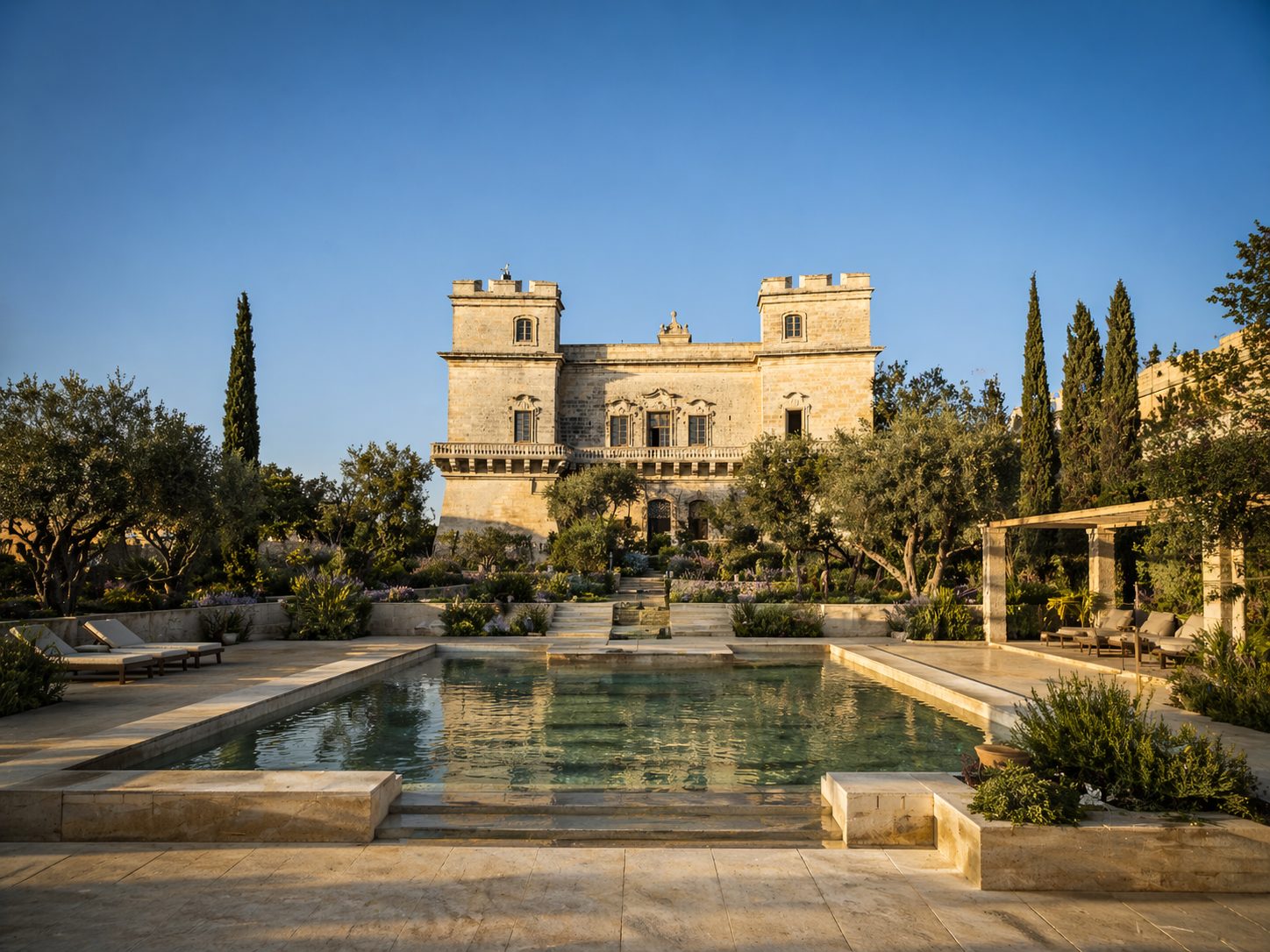
Selmun is not a hotel to be restored.
It is an estate to be made.
from the concept narrative, april two thousand and twenty-six.
the moment
The palace was built in the late eighteenth century by the Monte della Redenzione degli Schiavi, a charitable foundation set up under Grand Master Alof de Wignacourt in sixteen hundred and seven, to ransom Christians taken into slavery on the Barbary Coast. The estate had passed to the foundation in sixteen hundred and nineteen, through the bequest of Caterina Vitale. The earliest map reference, in seventeen eighty-three, names the building torre nuova.
The architect is unconfirmed. Most attributions are to Domenico Cachia, the architect of the Auberge de Castille; some name his contemporary, Tumas Cachia. The square plan, the four pseudo-bastions, the false embrasures, and the bell-cot on the roof draw their language from Verdala Palace and from the Wignacourt coastal towers.
The bastions were never defensive. The embrasures were never functional. Their purpose was aesthetic, and beyond that, performative. The palace was intended to read from the sea as a fortified outpost, to discourage Barbary corsairs from landing in the bays below. Selmun is, in this sense, an early piece of architectural theatre. A private leisure building dressed in the costume of a public defensive one.
The villa was let to Knights of the Order of Saint John as a country lodge, principally for the hunting of wild rabbit, which the surrounding garigue still produces in quantity. The rent flowed back into the redemption fund. A small chapel dedicated to Our Lady of Ransom sat inside the palace, a quiet acknowledgement of what the rent paid for.
Five distinct programmes have followed in two hundred and fifty years. During the Maltese rebellion against the French at the close of the eighteenth century, the British took the building as a naval hospital, the first to operate on the island. In the eighteen forties, a semaphore station was installed on the roof. In nineteen twenty-five, the palace was added to the Antiquities List. In the nineteen eighties, a four-storey hotel block was built behind it. In two thousand and twelve, the building was scheduled as a Grade 1 monument.
None of these programmes erased the building. Selmun's strength is the capacity to absorb new programmes without losing its identity. The proposal for its next chapter is consistent with this pattern, not a departure from it.
- 1607 charity foundation
- 1619 vitale bequest
- 1783 torre nuova built
- 1798 naval hospital
- 1840s semaphore station
- 1925 antiquities list
- 1980s hotel block built
- 2011 hotel closes
- 2012 grade 1 monument
- 2025 tender cancelled
the diagnosis
The palace addresses the landscape. The nineteen-eighties hotel block, behind and partly into it, addresses an internal yard. The palace is read from the sea. The block is read from a brochure. These are not stylistic preferences. They are categorical mismatches. The work of the project is to remove what diminishes the palace, and to introduce what allows it to function as the centre of an estate.
strategic role
Selmun's role is to extend the six-night stay into a longer one.
The volume game is over. The yield game is the lever. Selmun is one of a small number of sites on the island with the conditions to host the kind of guest who books five nights and stays nine. The architecture has presence. The landscape has drama. The horizon already exists.
The work is to add what allows these inheritances to function as a coherent whole, and to remove what currently weakens them.
the proposition
From hotel-with-palace
to palace-with-estate.
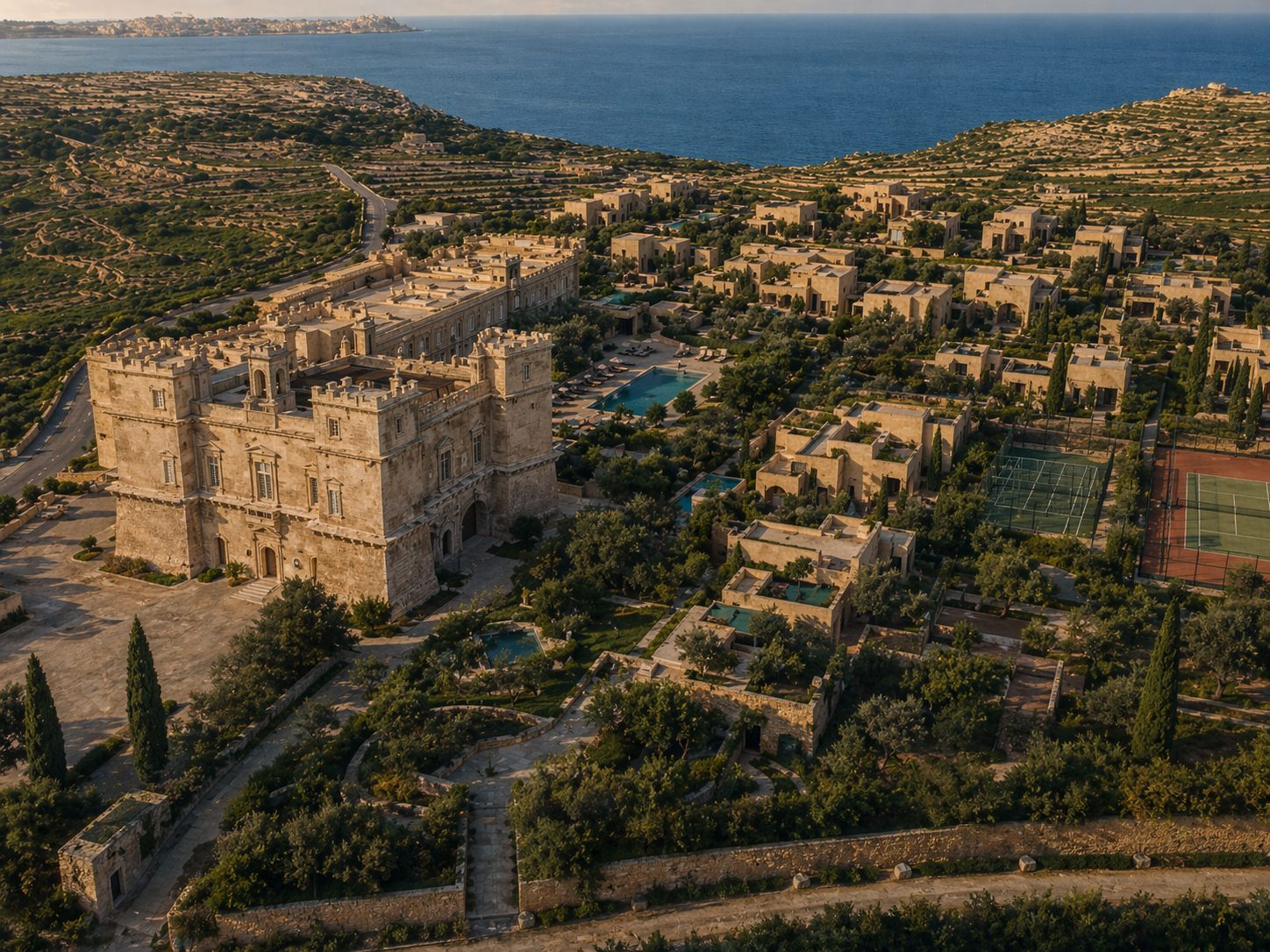
The nineteen-eighties block is removed. In its place, a low-density distribution of approximately forty serviced villas occupies a small fraction of the previous massing. The palace becomes the estate's ritual centre. The villas are the private residences within it.
The asset moves out of the segment occupied by Maltese resort hotels and into the segment occupied by branded heritage estates. The competitive set is no longer the Maltese coast. It is Reschio, Borgo Santo Pietro, Cap Rocat. The land becomes the brand.
three figures, three judgements.
The first frames the change of category. The second frames the change of asset class. The third frames the change of timeline. Each is the answer to a different objection the project will encounter.
A seventy per cent reduction in key count. The total built footprint is marginally below the existing block, distributed across a much wider area at lower massing. From every external viewpoint, the apparent volume of development falls.
A serviced villa at one thousand eight hundred to three thousand five hundred euro per night, against a refurbished room in the existing block at two hundred and eighty to four hundred. A different asset class entirely. A different operating year. A different guest.
Four phases. The palace and the first twelve villas in the first window. The wellness pavilion and fifteen further villas in the second. Shorter than the fifteen years the site has spent dormant. The right length for a project of this scale in the Maltese planning environment.
the palace
The palace is not a lobby.
It is the ritual centre of the estate.
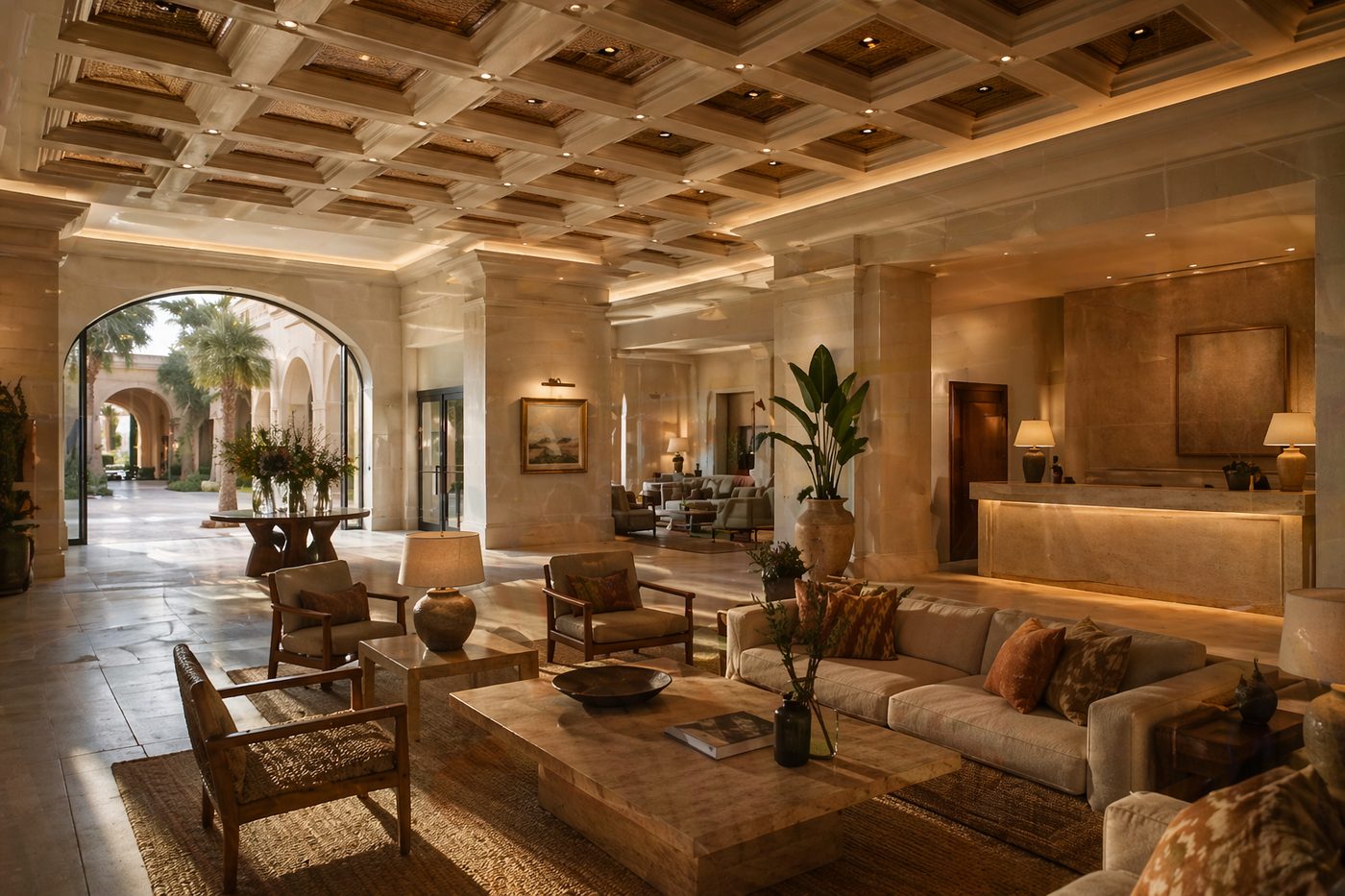
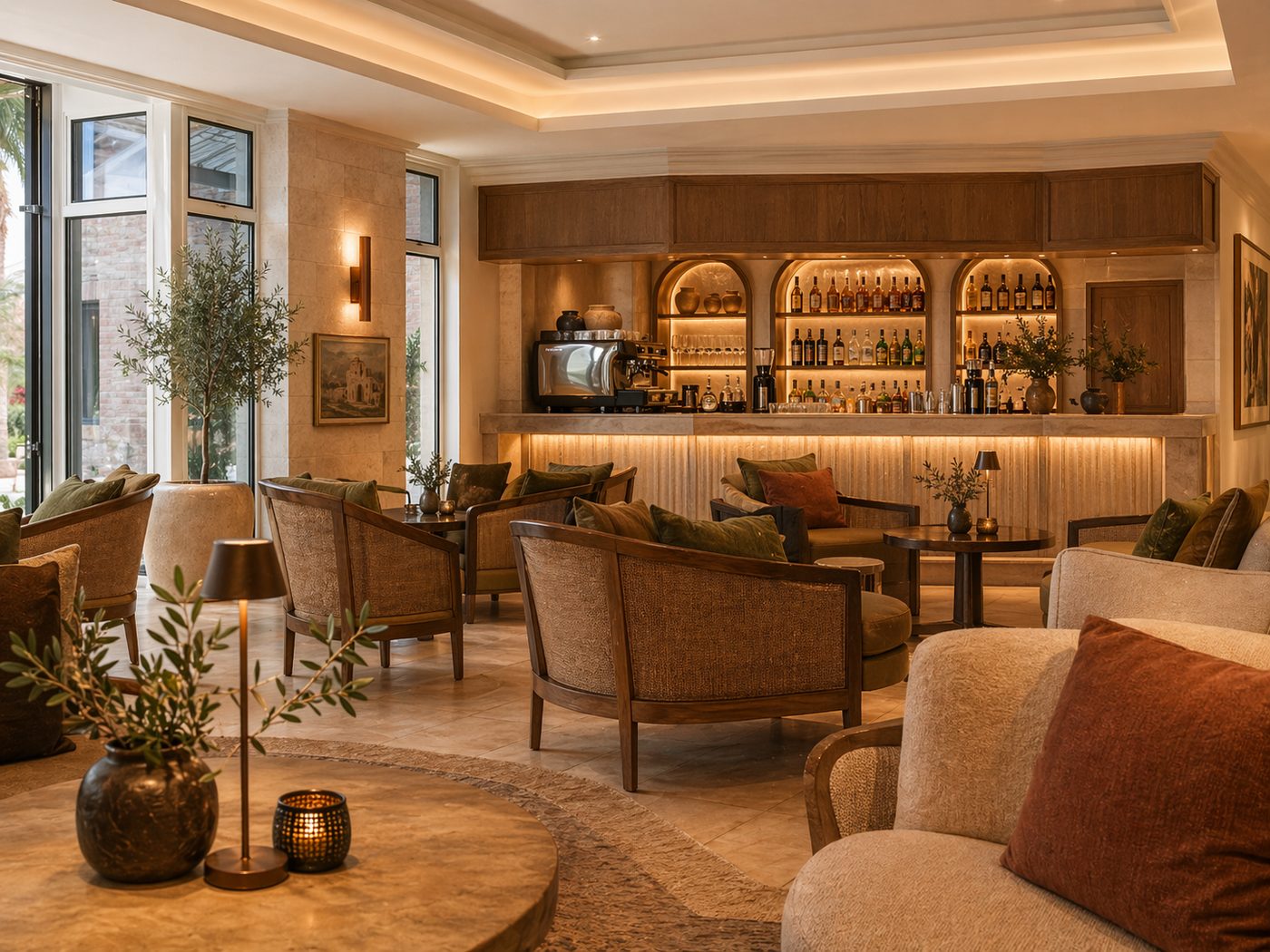
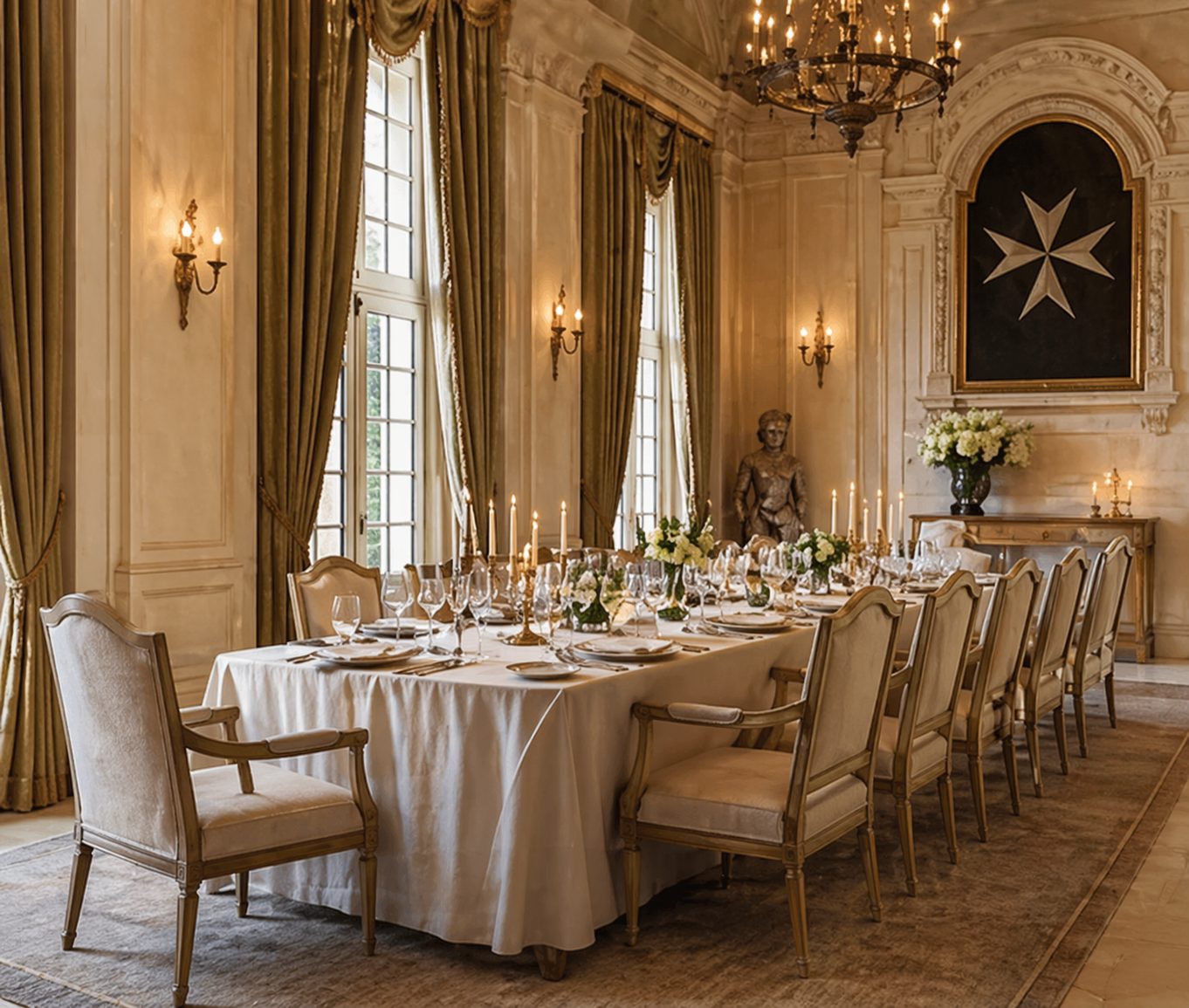
The ground floor takes the public programme. A salon, not a counter. A signature restaurant. A smaller seasonal dining room. A bar in the manner of a private club. The first floor takes a small number of state-room suites, no more than five. The roof terrace and balcony are returned to use.
the villa
A maltese typology, revised.
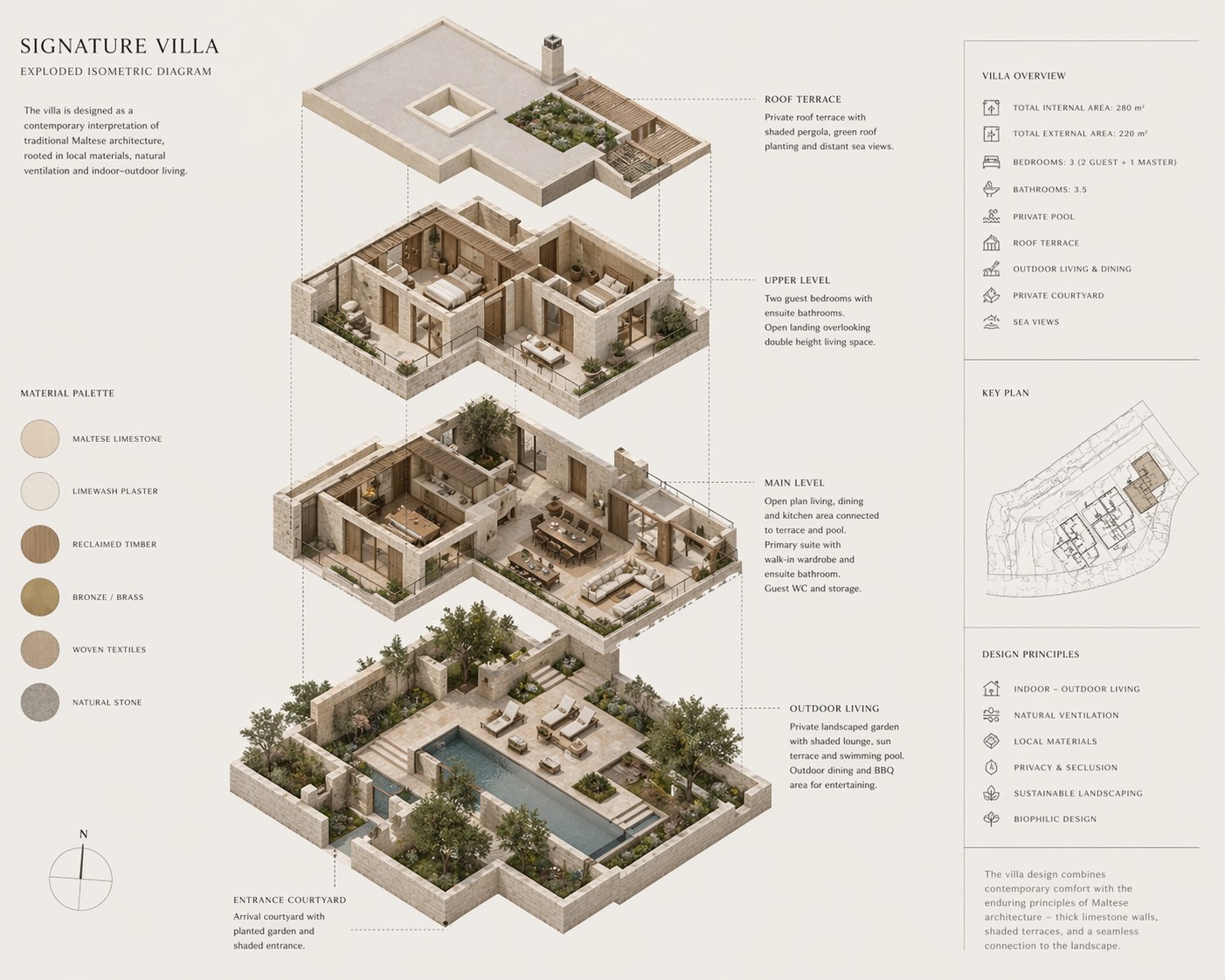
The reference is the razzett, the Maltese rural farmhouse. Thick limestone walls. Deep window reveals. A central courtyard. A flat roof that doubled as a working surface. A cistern below.
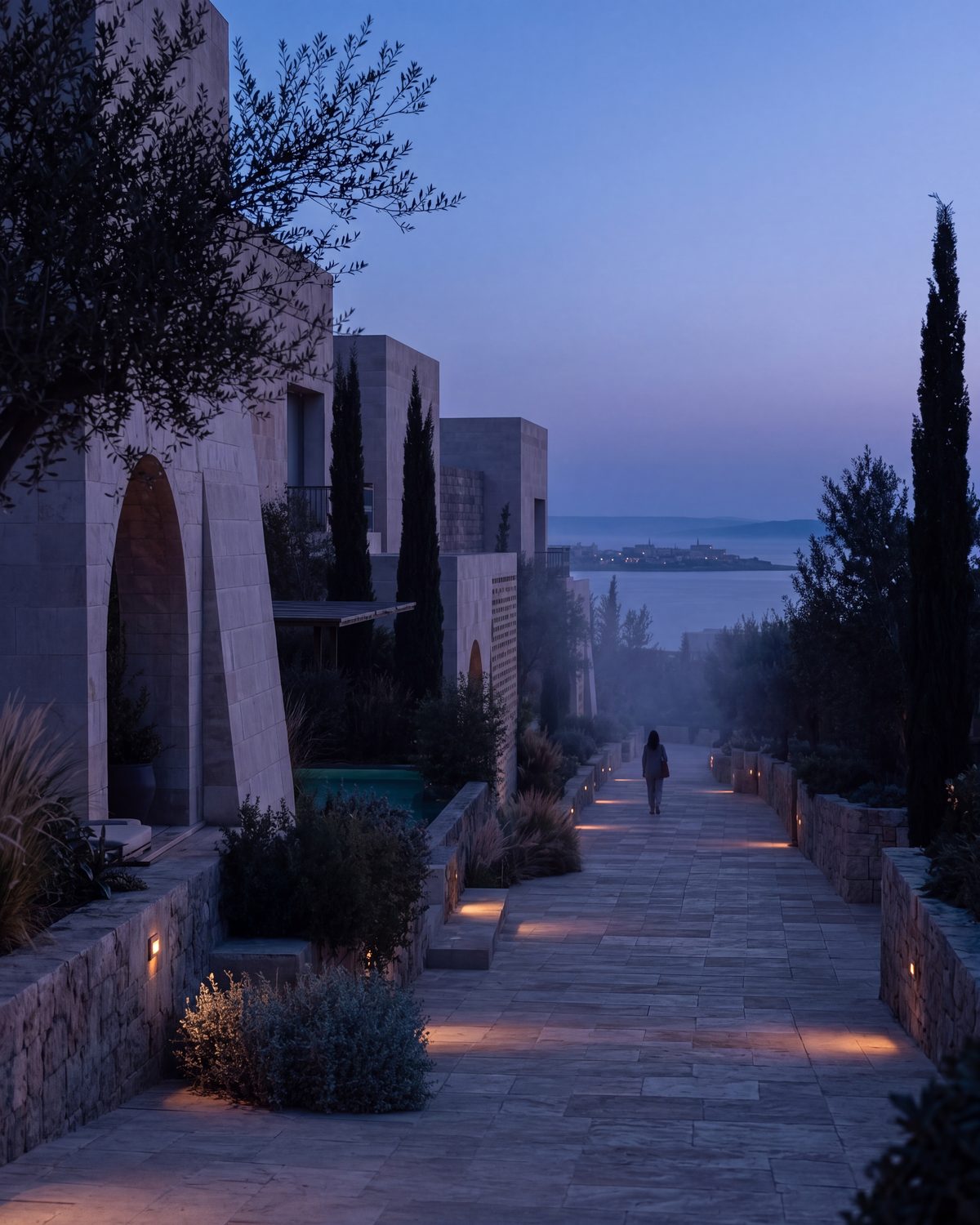
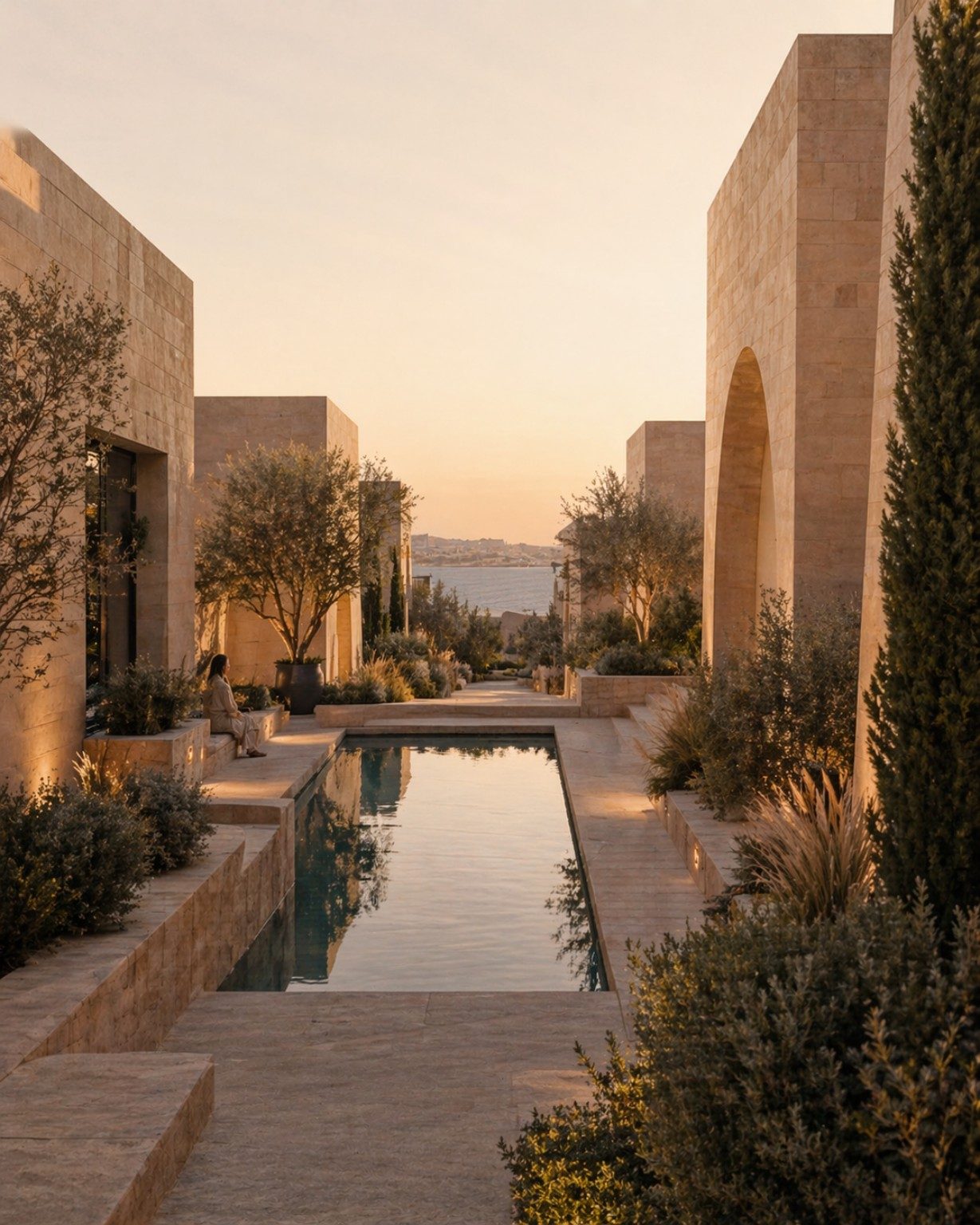
The villas inherit these strengths and add what residential occupancy now requires. Each is organised around a private courtyard, with a single double-height living core. The interior is generous. The exterior is calm. It is a Maltese house, not a Mediterranean cliché.
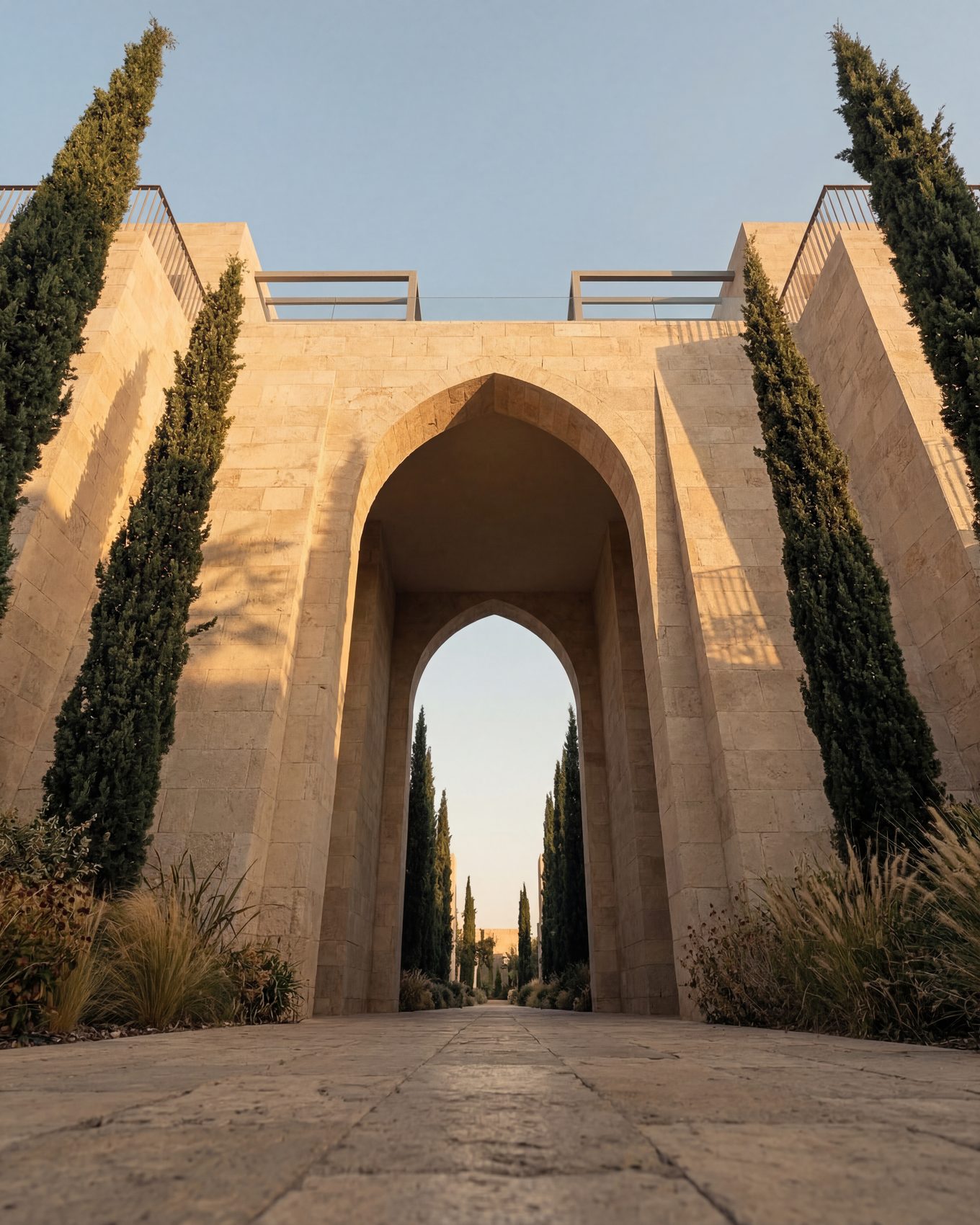
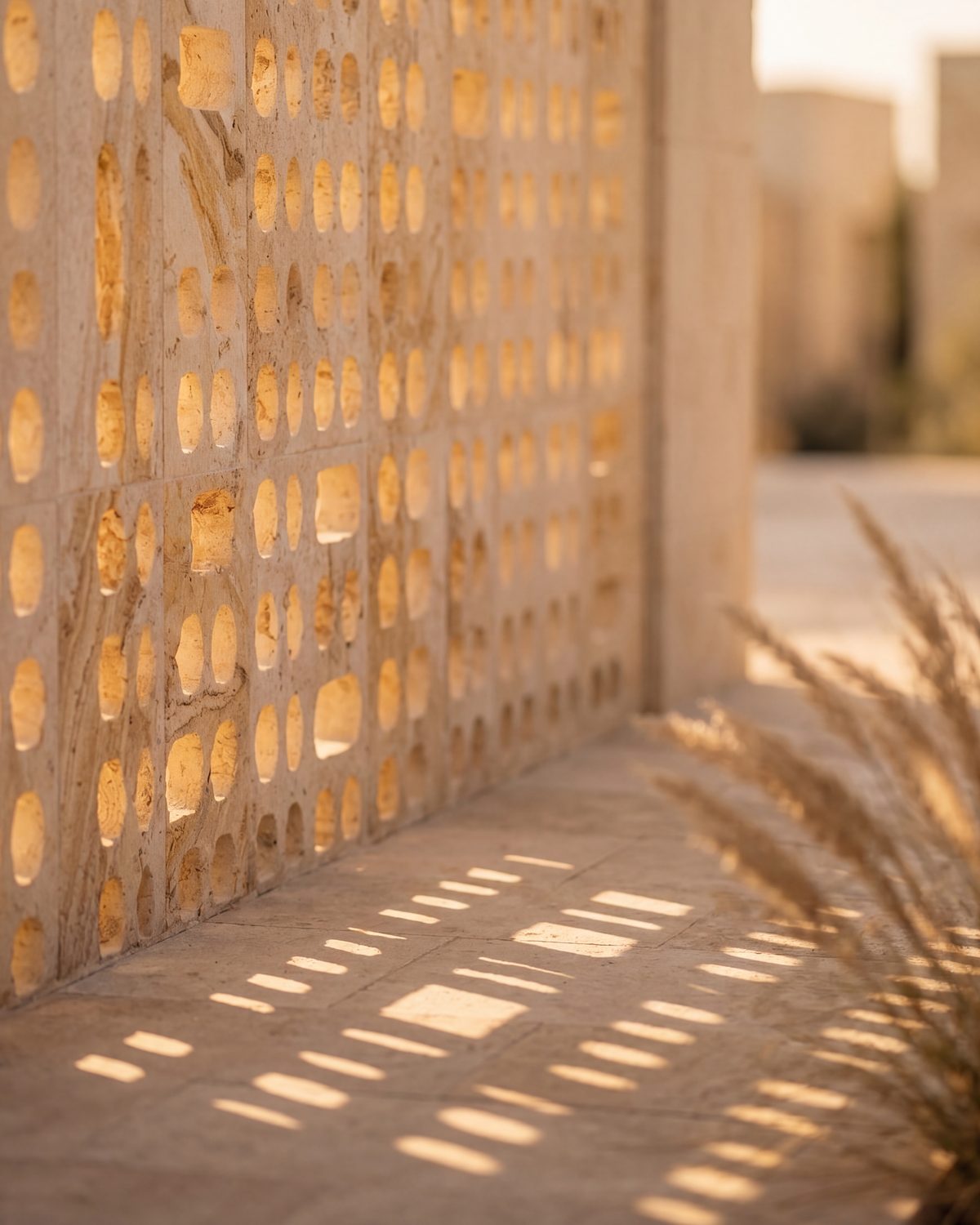
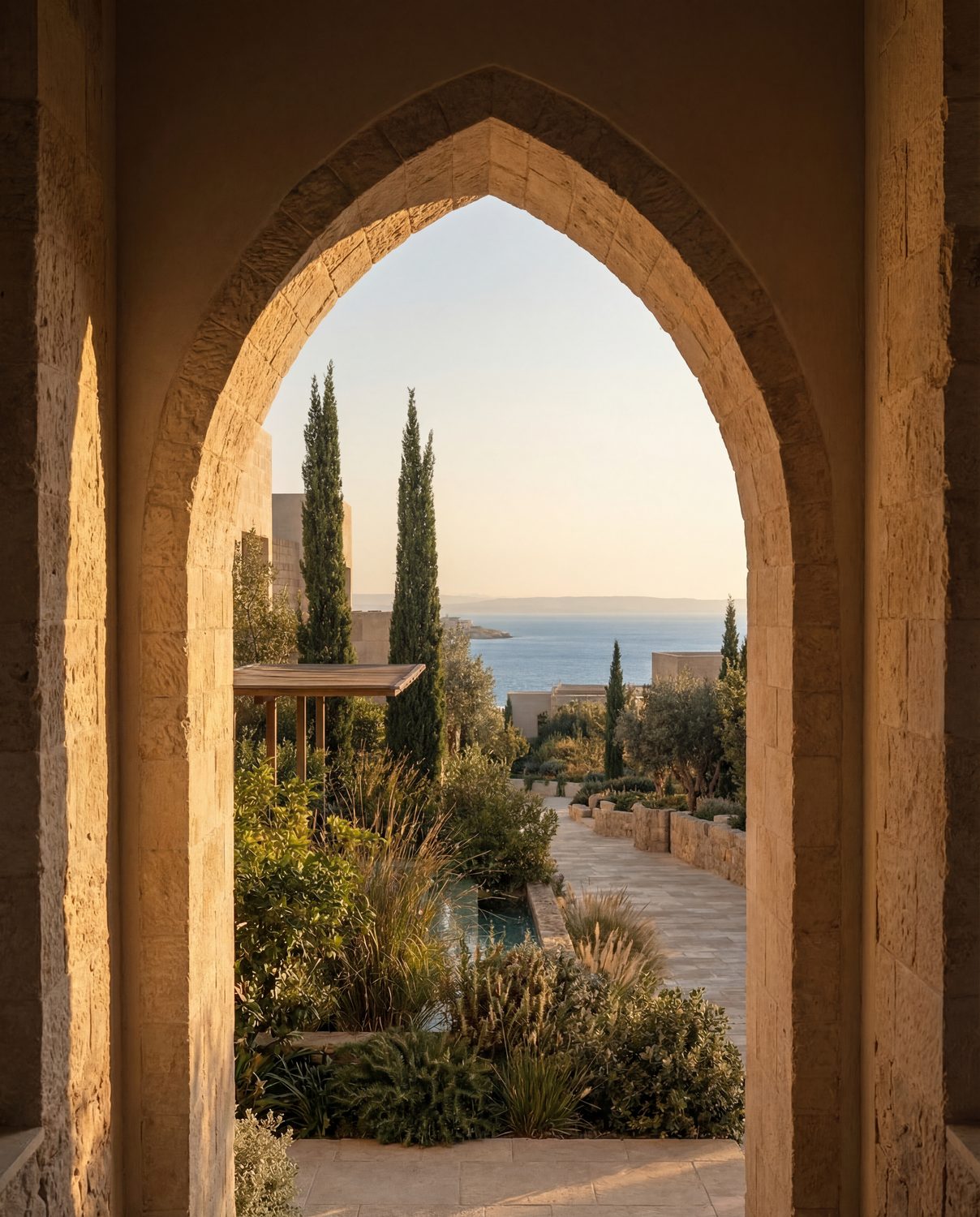
The detail vocabulary is honed to a few elements held in common across the estate. Pointed-arch openings drawn from the older Maltese coastal architecture. Perforated stone screens for shade and ventilation, cut from the same Globigerina block as the walls. Dry-stone ħitan tas-sejjieħ at the parcel boundaries. The buildings are calm because the language is small.
the sequence
From the threshold to the horizon.
Three movements through the estate, each one taking the guest further into the architecture, each one opening the world more. The further into the building the guest goes, the more the landscape returns.
the place
Selmun, on the peninsula.
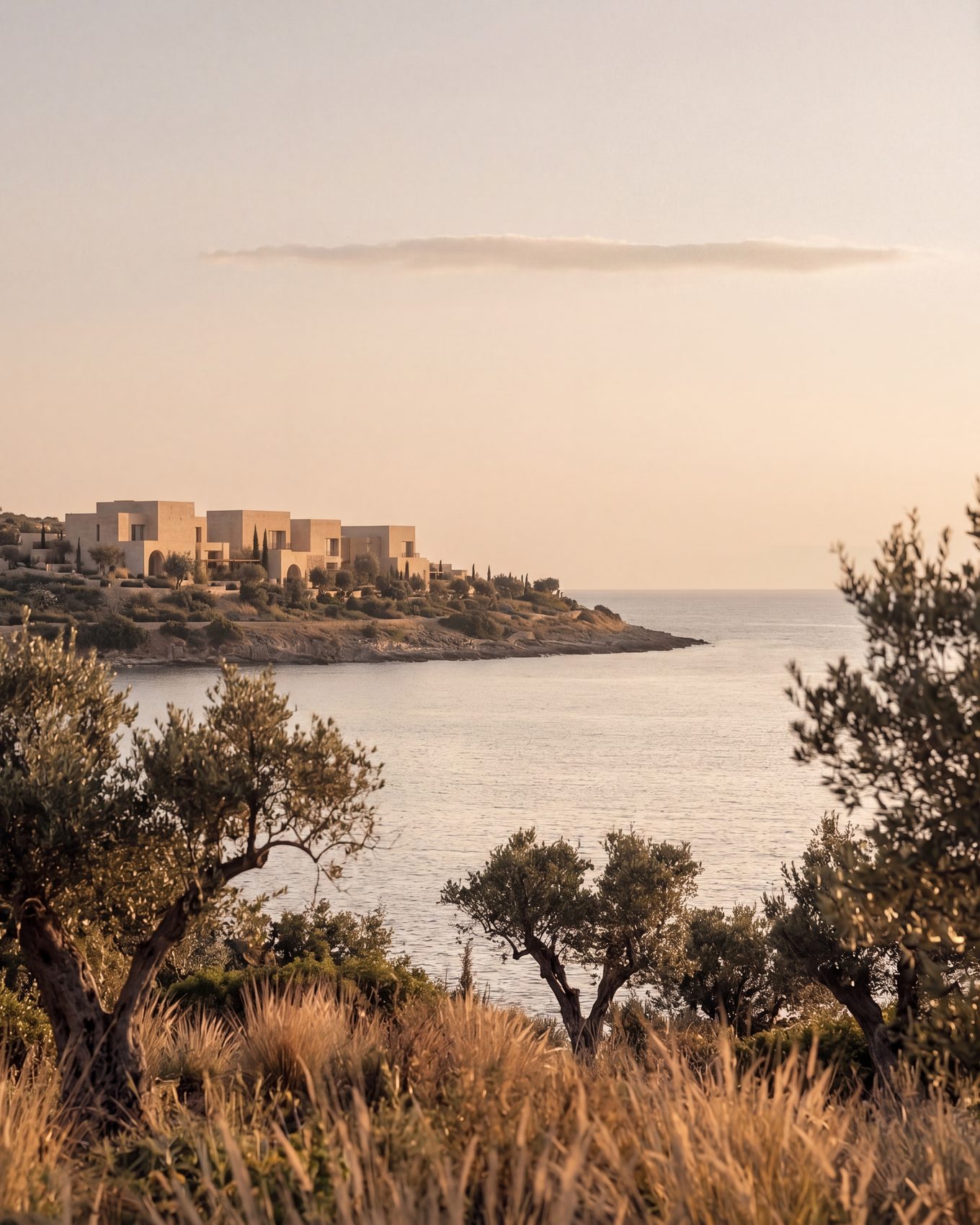
Twenty minutes from the airport, ten minutes from Mellieħa, on a Grade 1 plateau between Mistra Bay and Mġiebaħ Bay. The site is largely Outside Development Zone. The landscape is the project's principal asset, and the planning regime is its principal ally.
From the ridge road into Mellieħa, the palace is the first thing the eye finds. From the surrounding country, the silhouette is unmistakable. From the sea, it is the building everyone remembers, and no-one has yet been inside.
closing
it needs to become more itself.