opening
the lede
malta's first destination of scale,
built beneath its surface.
seven lands. five beneath the ground, two above. the country at large unchanged. the country below, restored.
malta has the longest tourism history in the mediterranean.
it has never had a destination of scale that argued for the country.
since independence in 1964, malta has built hotels, marinas, beach clubs, water parks. each one above the ground. each one a version of what other mediterranean countries had already built first. what malta has never had is a tourism destination that reads malta, rather than imports onto it. the threshold is the first.
three figures hold the argument.
a number for the project's scale. a number for the country's underground tradition. a number for the seasonal answer the project quietly carries.
five lands sit beneath the surface. two come up: the coaster, which needs verticality, and the seafront promenade, which needs the actual sea. the rest is invisible from the road.
the hypogeum at ħal saflieni is five thousand years old. the catacombs of rabat, the war shelters at every village, the rock-cut chapels of every parish. the threshold is the next entry on this list, not the first.
the temperature beneath maltese rock, every month of the year, with no engineering. above ground it is thirty-eight in august and fourteen in january. below ground, a single number. this is the project's commercial answer, hidden inside its cultural one.
the diagnosis
malta has built every tourism project of the last sixty years on its surface. the threshold is the first that does not. five of seven lands sit beneath the rock. the surface is left to the country. what is seen, from the road, is a quiet coastal landscape. what is unseen is the destination beneath it. that is not a planning compromise. it is the project's central architectural defence.
transition · landscape
the concept
country beneath
the country.
not a theme park imported onto the landscape. a project that has read the country.
the threshold's premise is that malta's deepest meaning has always been beneath its surface. the hypogeum, the catacombs, the war shelters, the rock-cut chapels. the project does not reference this tradition decoratively. it continues it. seven lands, organised as a country beneath a country, dedicated to what malta has been doing for five thousand years.
seven lands. five beneath, two above.
each land carries a different argument, and a different register of attention. the five below the rock answer for the country's cultural lineage. the two above answer for the things that cannot be hidden. the coaster, which needs verticality. the seafront, which needs the actual sea.
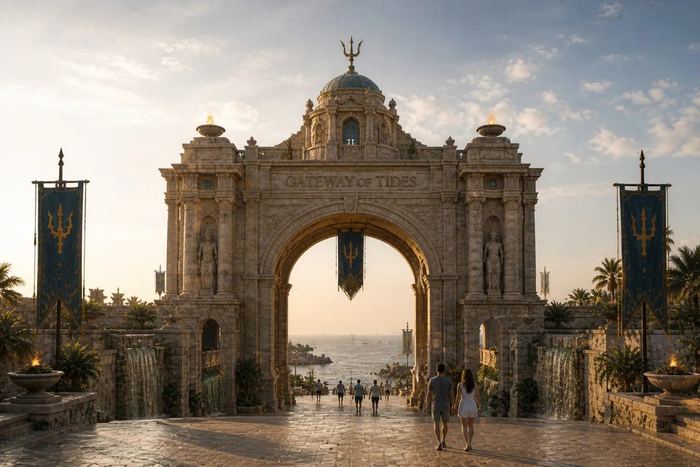
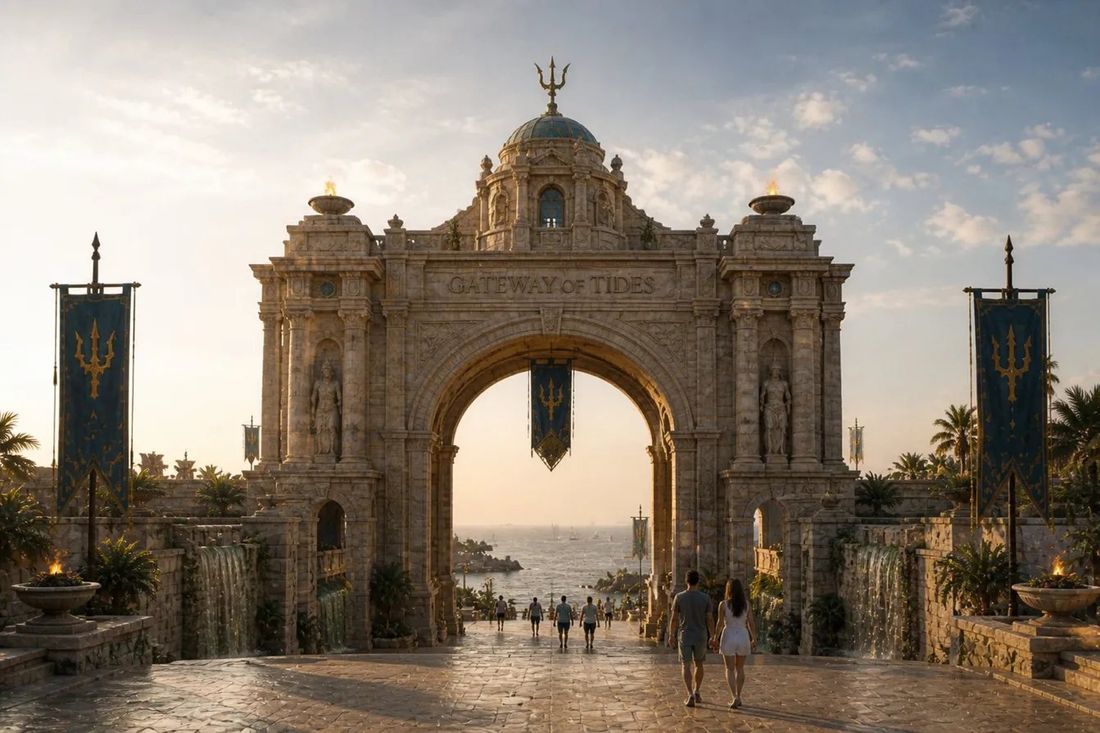
the descent that opens the country. an arch on the coast, water falling beside it, a route that disappears beneath. the moment of arrival is the moment of disappearance.
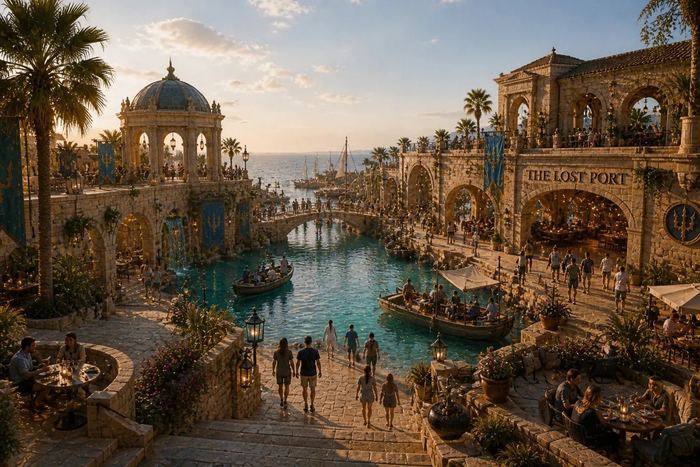
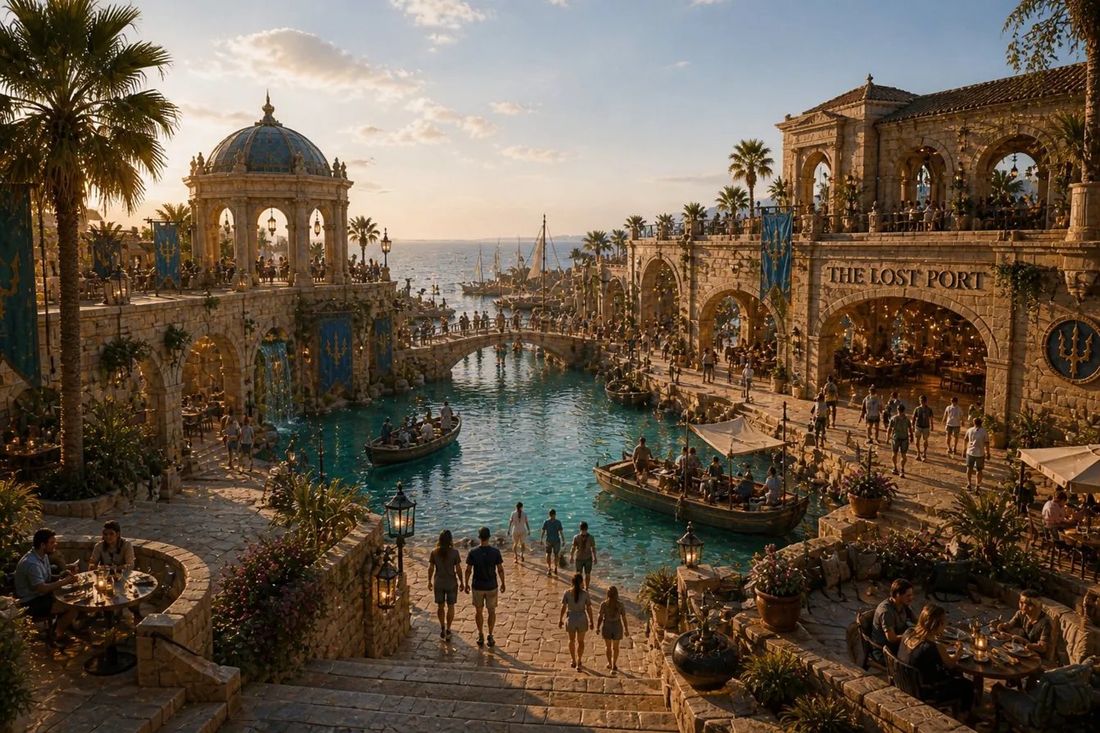
a port without trade. a port that exists only to be a place. small wooden boats on still water, stone arcades for shade, dining tables under domes.
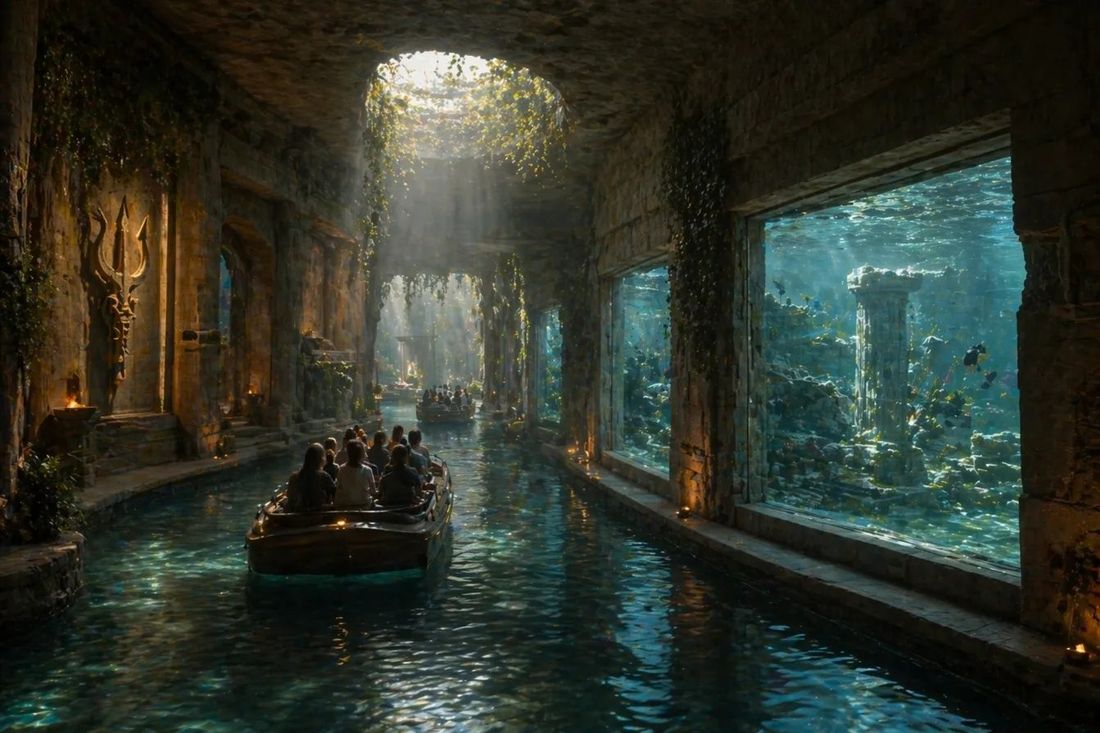
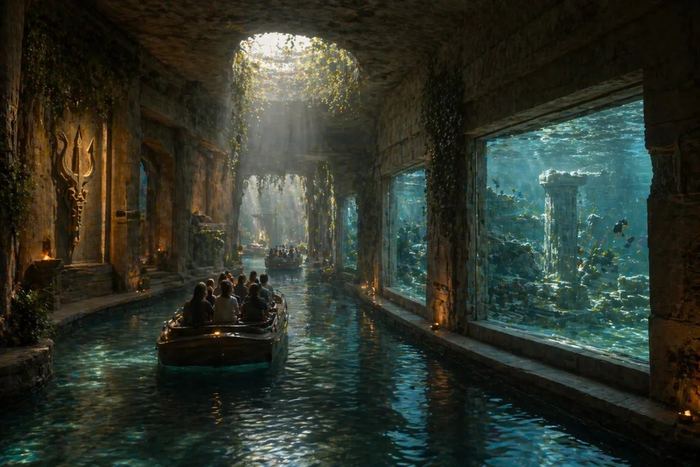
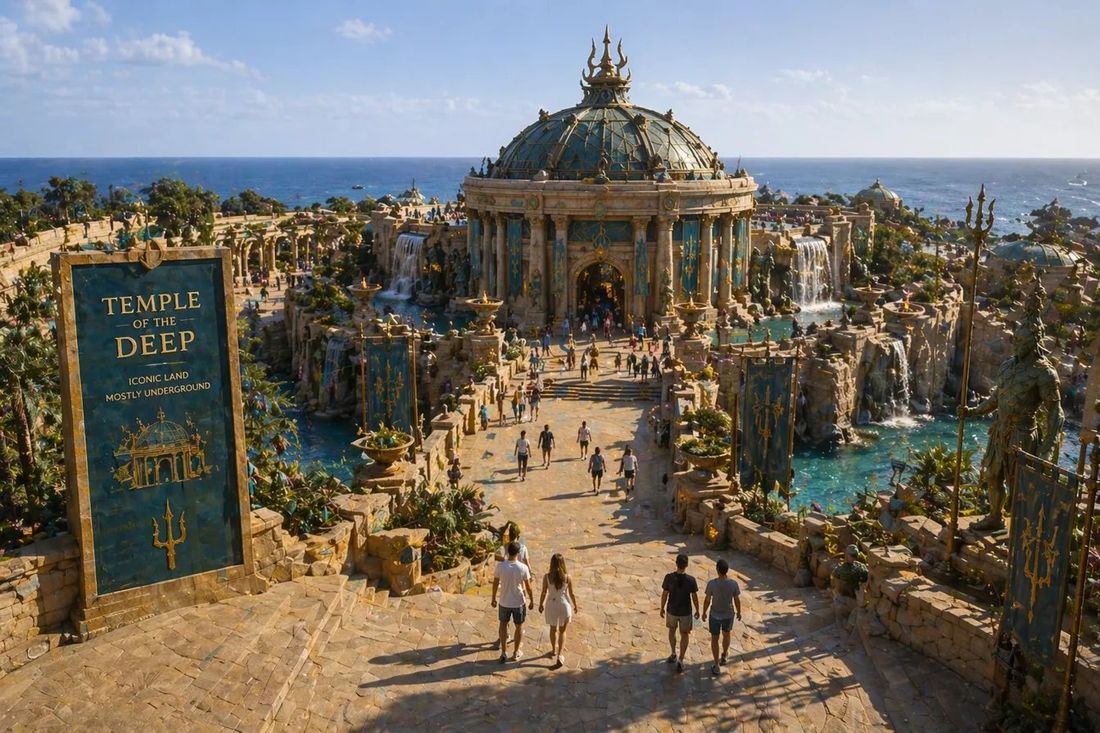
the project's signature interior. a slow movement through carved stone, past glass walls that hold the country's underwater history. a ride that does not entertain. it reveals.
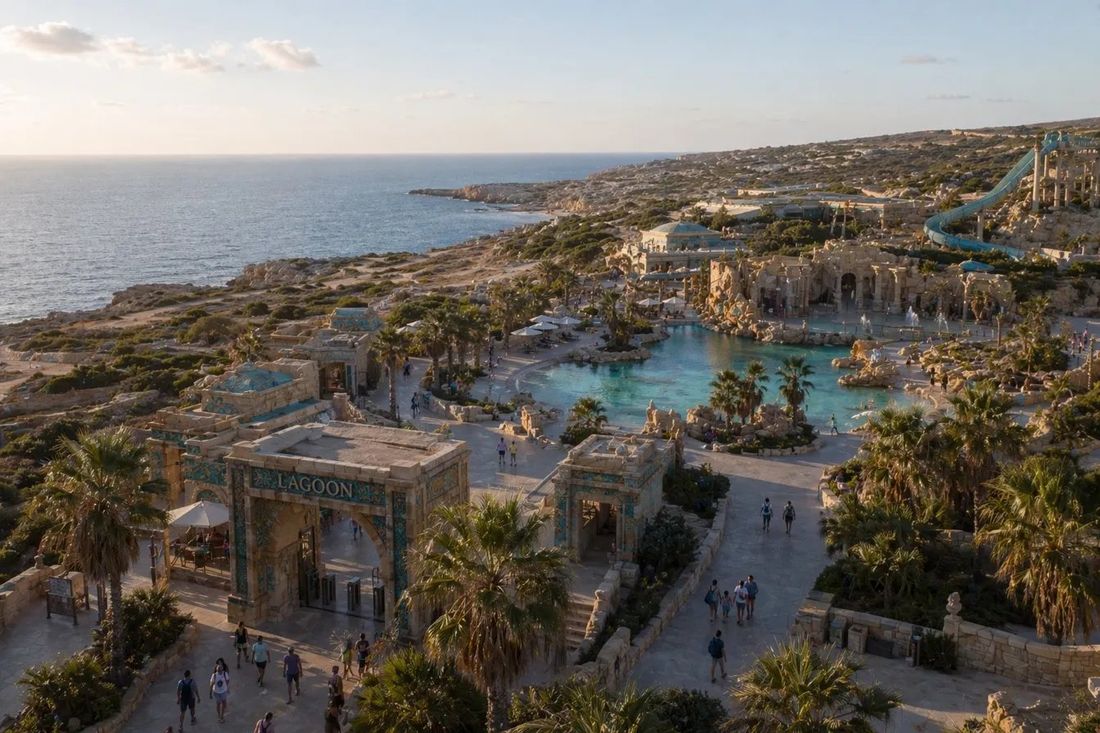
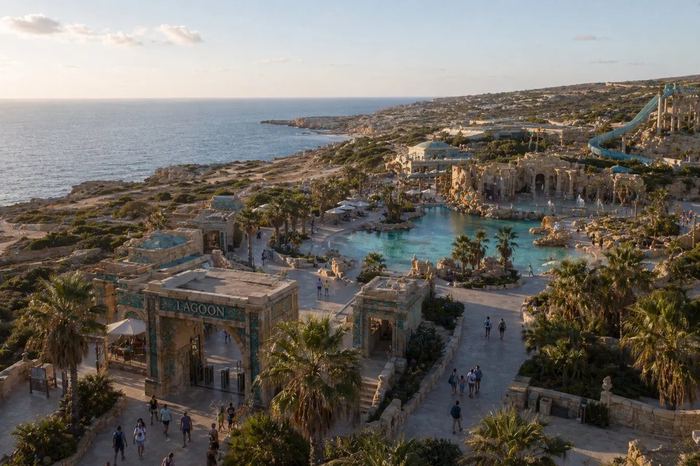
the maltese pool, finally at scale. cut into stone, not poured. open at the centre. children will not understand the architectural argument. they will simply understand that the water is theirs.
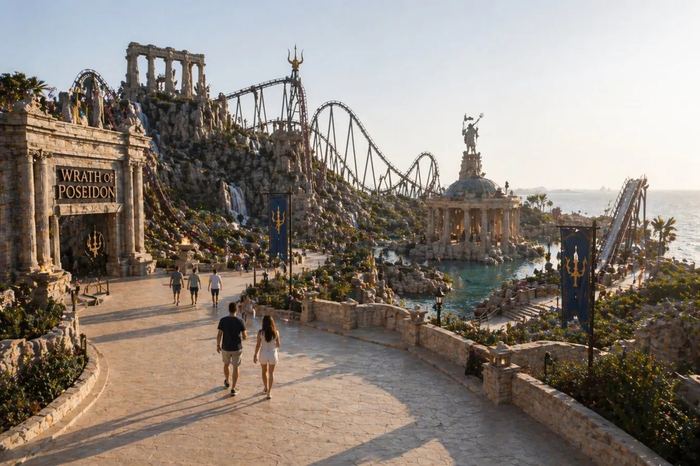
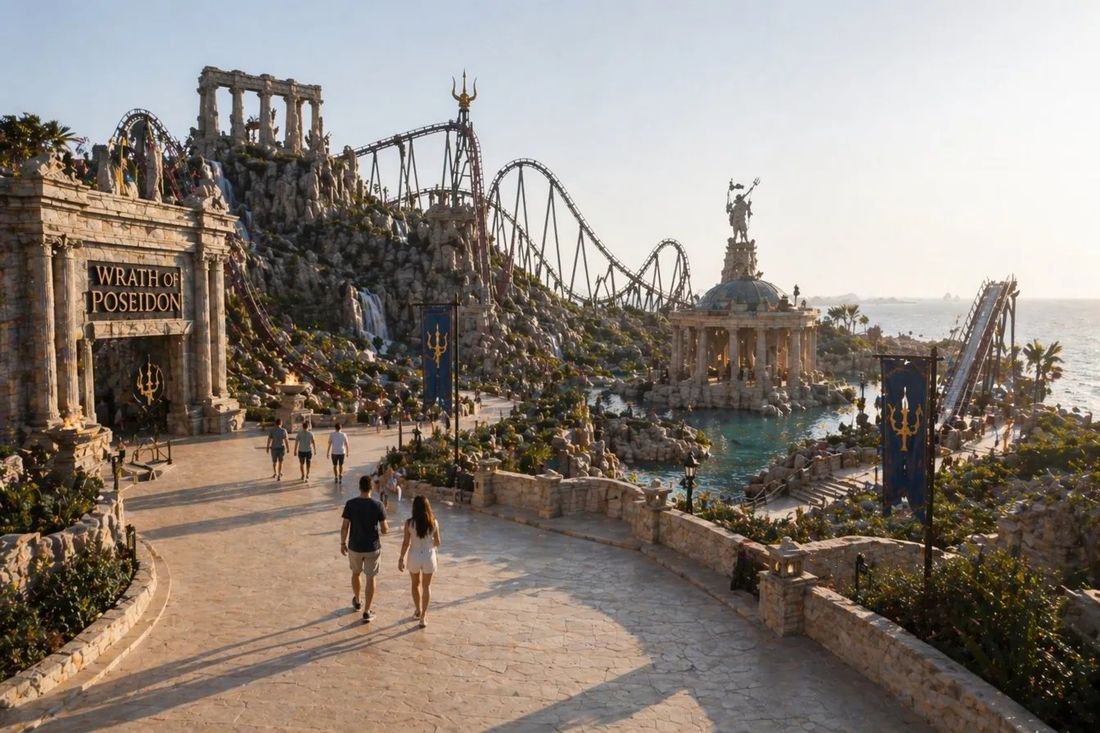
the only loud land, and the only land that rises. heat rises, and so does the coaster. broken columns, half-walls, fragments. ruins that are not what remains, but what the country has chosen to allow above.
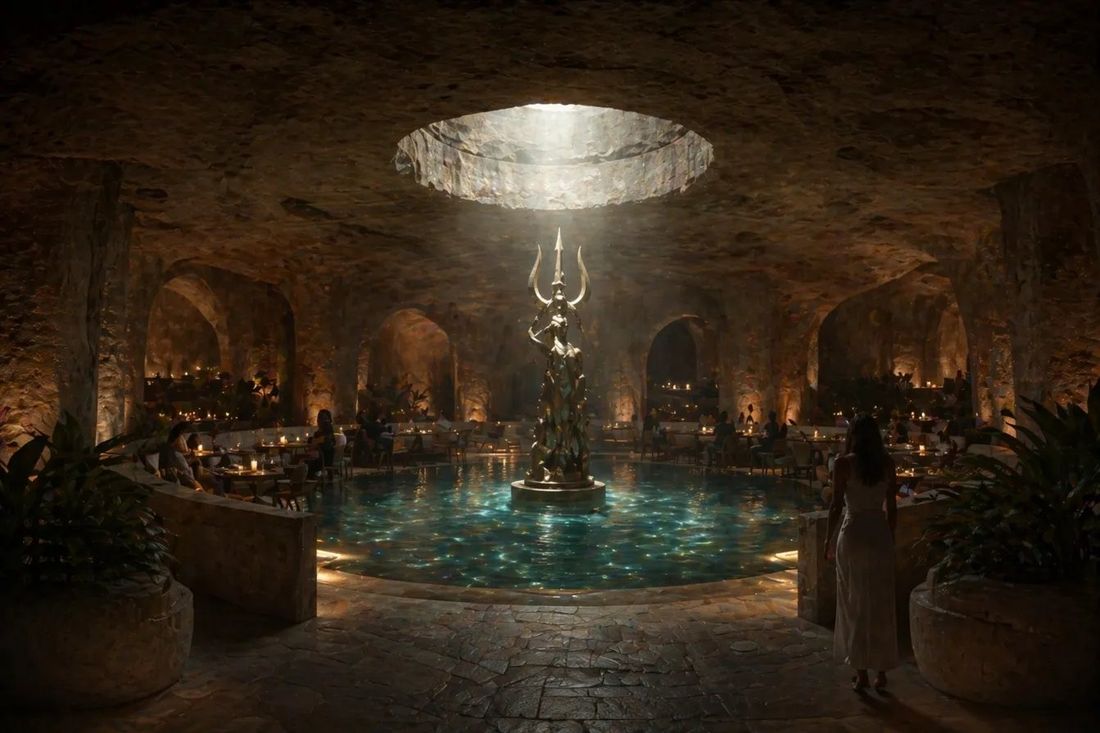
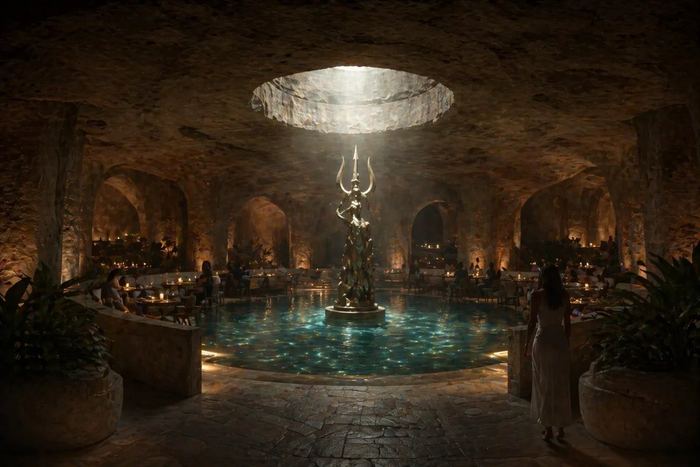
a chamber the size of a small village, carved beneath the rock, where the sky is restored to the eye that has lost it. a single circular opening, calibrated by season and hour, admits a known quantity of sky.
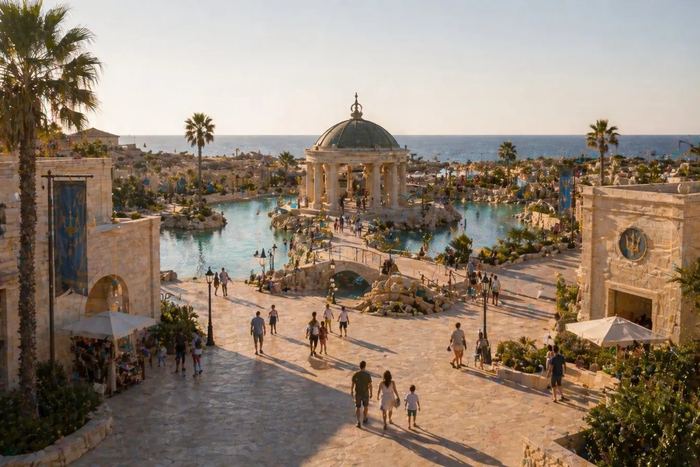
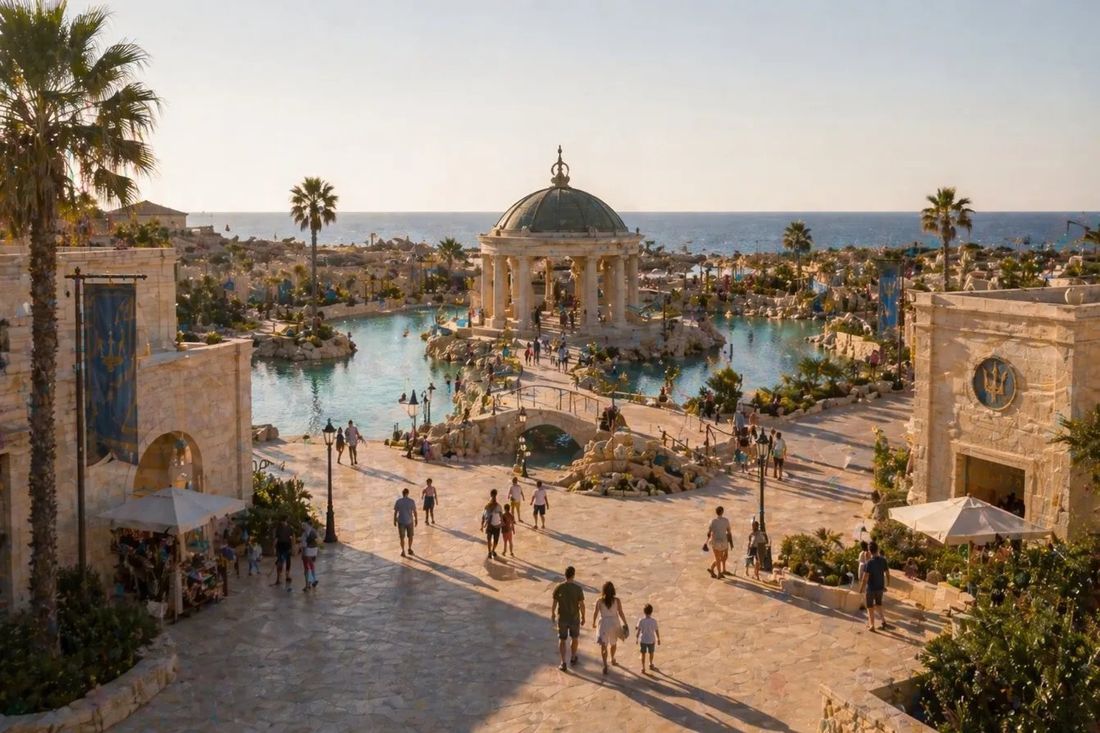
the only land we did not build. the sea was already here. the rock was already here. our addition is the smallest one the project makes. a promenade, dining, a stone path. the project's largest gesture is the moment it stops gesturing.
the curious.
the visitor who came for the architectural argument. the one who reads the manifesto before the brochure, who lingers in the temple of the deep, who finds the celestial realm before lunch. typically older, often international, often returning. the most valuable kind of visitor a destination can have.
the family.
parents and children who came for the lagoon, the cool air, the long day. the lagoon kingdom is theirs. the ruins of fire is theirs. the caverns and the open spaces let a family of four walk for six hours without a single one of them complaining about the heat. the project's broadest audience.
the slow.
the visitor who came for silence. who books the celestial realm at sunrise. who sits in the temple of the deep until the boat has passed three times. who eats alone at the cavern and stays for the second course. the threshold is the only maltese destination at scale that rewards stillness.
the night.
malta's evening visitors have nowhere to go that is both serious and atmospheric. the threshold's evenings begin at sunset, in the lost port. dining under the dome. the cavern after dark. the seafront promenade walked back to the road. the destination does not close at six.
the local.
the maltese visitor, the most demanding audience the project has. the one who knows what the country is, and who will judge whether the project has read it. if the local visitor recognises the references, if the maltese family understands the celestial realm without explanation, if the local critic respects the precedents, the project has succeeded.
a day at the threshold,
scored hour by hour.
a destination of this scale must not be navigated. it must be choreographed. six movements describe the day a visitor takes. the same six describe a destination that does not collapse the moment the weather changes.
the day does not end with a final attraction. it ends with the visitor sitting in a chamber, looking up. that is the project.
transition · instruments
the seven moments.
each land has been worked through to the point where it can carry the argument. the seven images that follow are the project's signatures. each one a different register of attention. each one a different argument for the country beneath the country.
gateway of tides.
every country shaped by the sea has a place where it begins. malta's begins beneath. you arrive on a coast that does not announce a destination. there is a stone arch, water falling beside it, and a route that descends. by the time you understand that you are no longer above ground, you have already crossed.
read the manifesto —
the lost port.
every port malta has had has been lost to something. silt. siege. fire. the lost port is the first port malta has chosen to bury. a constructed mediterranean harbour, beneath the surface of the country. small wooden boats moving on still water. a port without trade. a port that exists only to be a place.
read the manifesto —temple of the deep.
a temple is a building dedicated to something that cannot be argued with. the temple of the deep is dedicated to the country it sits beneath. at its centre is the submerged passage. a slow movement through carved stone, past glass walls that hold the country's underwater history. a ride that does not entertain. it reveals.
read the manifesto —
lagoon kingdom.
malta has always cut its pools into stone. the blue lagoon at comino. saint peter's pool. għar lapsi. the maltese pool is not a feature. it is a national habit. lagoon kingdom is the constructed answer to a question malta has been asking for centuries: what would a maltese pool look like, if it were not natural and not a hotel and not a beach club, but a country's own water.
read the manifesto —ruins of fire.
ruins are usually what remains. the ruins of fire are what is rising. every other land in this country sits beneath the surface. this one cannot. heat rises. the architecture above ground is intentionally fragmentary. broken columns, half-walls. these are not decorative. they are the country's answer to the question of what the surface looks like above a buried world.
read the manifesto —
celestial realm.
the clearest view of the sky in malta has always been from below it. the country is small. its towns are close. there is no horizon left in malta from which the sky is empty. except below the surface. a chamber the size of a small village, carved beneath the rock, where the sky is restored to the eye that has lost it. what happens next is not theatre. it is silence.
read the manifesto —edge of the sea.
this is the only land we did not build. the sea was already here. the rock was already here. our addition is the smallest one the project makes. a promenade, a row of dining terraces, a stone path. the previous six lands argued for a country beneath a country. this one closes the argument by no longer making it. the project's largest gesture is the moment it stops gesturing.
read the manifesto —
five thousand years of underground malta.
malta has more underground per square kilometre than any other country in the mediterranean. the threshold is the next entry on a list that has been growing since the fourth millennium before christ. not the first, not the last.

one country, one place.
the threshold sits on malta's north coast, at baħar iċ-ċagħaq, on the site of two existing destinations the project consolidates and replaces. one marker, on the country.
the country, drawn in ink. one place. one project.
the season
malta's tourism has always been a five-month country. june to september pays for the year. the rest is survival. a destination of this scale, exposed to that pattern, would fail. unless. above ground, malta is thirty-eight degrees in august and fourteen in january. below ground, twenty degrees, every month of the year, with no engineering. five of seven lands sit beneath the rock. the same move that defends the project culturally is the move that makes it work commercially. the project is the first maltese destination of scale that does not collapse in the off-season.
the country becomes unwalkable. the trip survives by hotel air conditioning and the sea.
the country becomes inert. the country's seafront destinations close. the season collapses.
the country's underground temperature, year-round, with no engineering and no cost.
four objections,
answered before they are raised.
malta will ask four questions of this project. it should ask them. each one is real. each one has a defensible answer that lives in the same architectural move as the project itself. silence on these questions is not a strategy. naming them is.
closing
is often more powerful
than what is visible.