opening
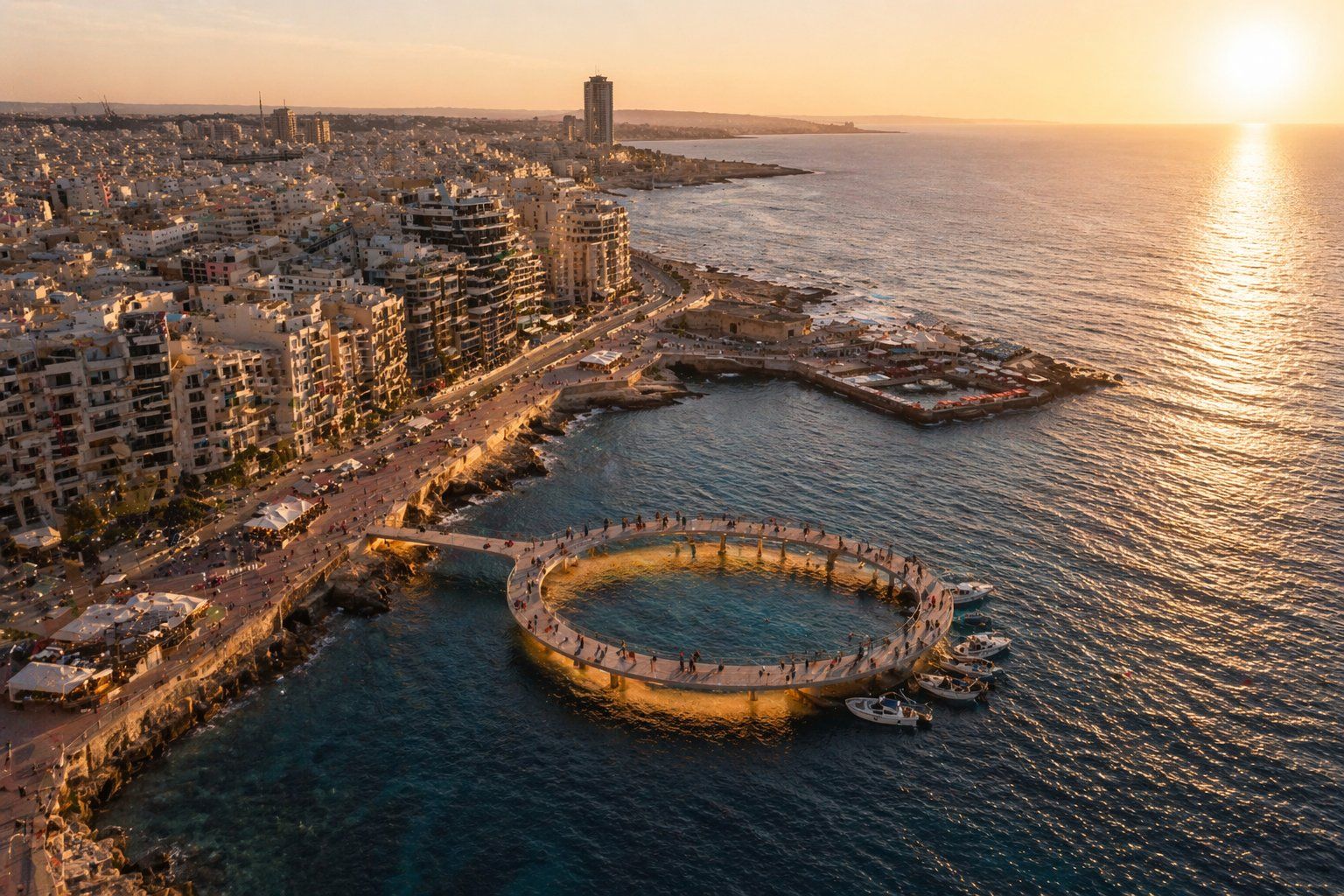
the lede
not a reconstruction of the nineteen-twenty-six building.
a reactivation of what the site once meant, in the vocabulary of today.
by day, a promenade magnet. by night, the destination atmosphere the evening economy currently lacks at the quality end of the market.
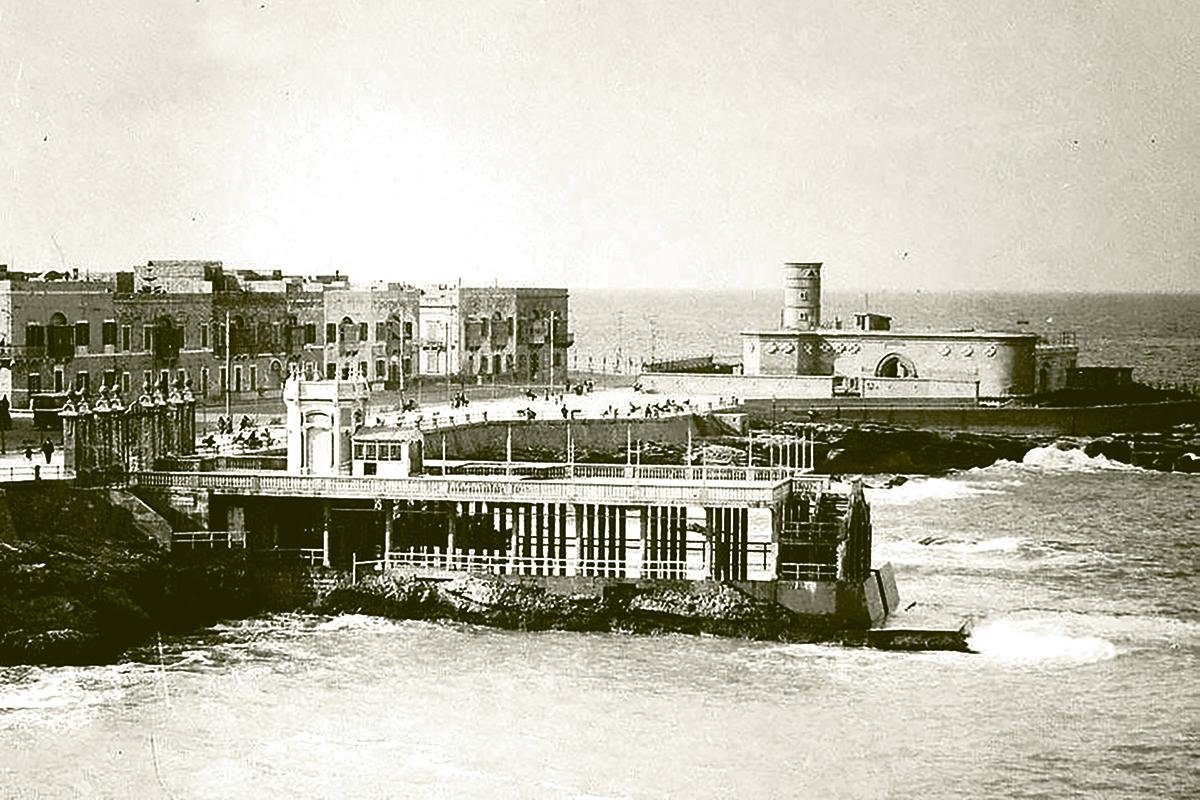
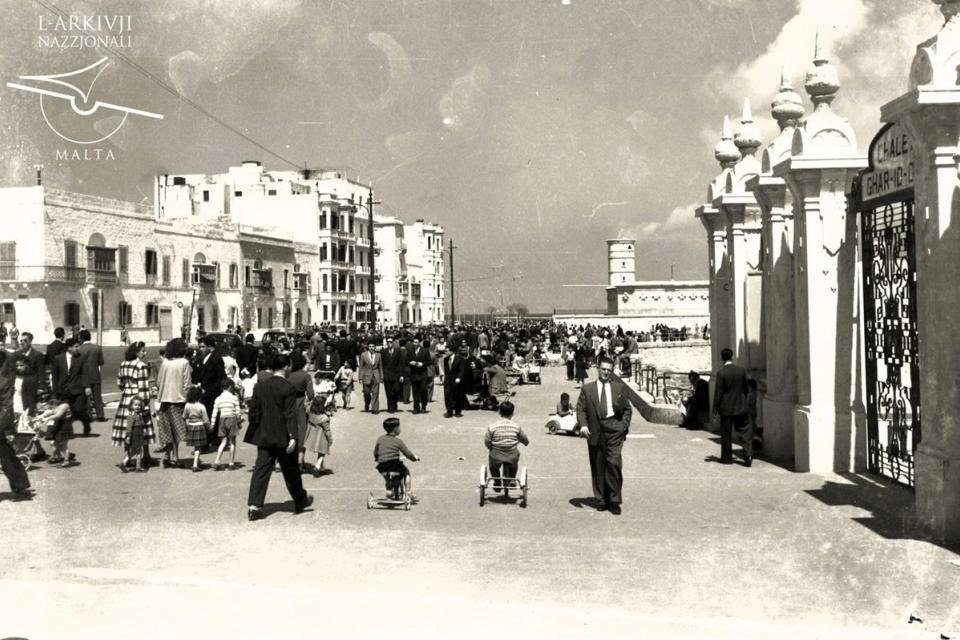
the watering hole of an island.
closed too early, dismantled too late.
In November nineteen-twenty-three the Government Gazette published a public call for a thirty-year concession of a public site at Għar id-Dud. Carmelo Axisa won it. Major Benjamin Cordwell of the Royal Engineers designed the building, a cross between then-fashionable art deco and neo-liberty styles. On the twelfth of May nineteen-twenty-six the chalet opened. Two storeys of reinforced concrete on the jutting reef. Upstairs, the café, with the orchestra and the ice cream produced on site. Downstairs, the dance hall, with a second orchestra. By day, patrons danced in their swimwear with the windows obscured. On Sunday evenings the same room was suit and tie.
A direct bomb strike in nineteen-forty-two interrupted everything. The building was sold and reopened under new management in nineteen-forty-four, but had drifted from elegant venue toward kiosk by the end of the decade. Declared unsafe in nineteen-fifty-nine. Closed in nineteen-sixty-three. Abandoned for forty-three years. Dismantled in two thousand and six. Two generations of teenagers used the upper deck as a public diving board until the day it came down. The slab is still there. People still bathe.
three levels. three rooms.
The project is legible in three numbers. The first is the public piazza above the sea, three and a half metres above the promenade. The second is the marine basin, at the level of the sea itself. The third is the dining hall, three and a half metres beneath. The three numbers describe the section. The section describes the building.
A circular public promenade three and a half metres above the sea. Walking, sitting, gathering, three-hundred-and-sixty-degree views. The civic level. Open at all hours. The level the city already understands.
A second loop at the level of the sea, where the water is held inside the geometry of the building. Swimming, sunbathing, small-craft mooring on the outer edge. Not a pool. A controlled piece of the mediterranean.
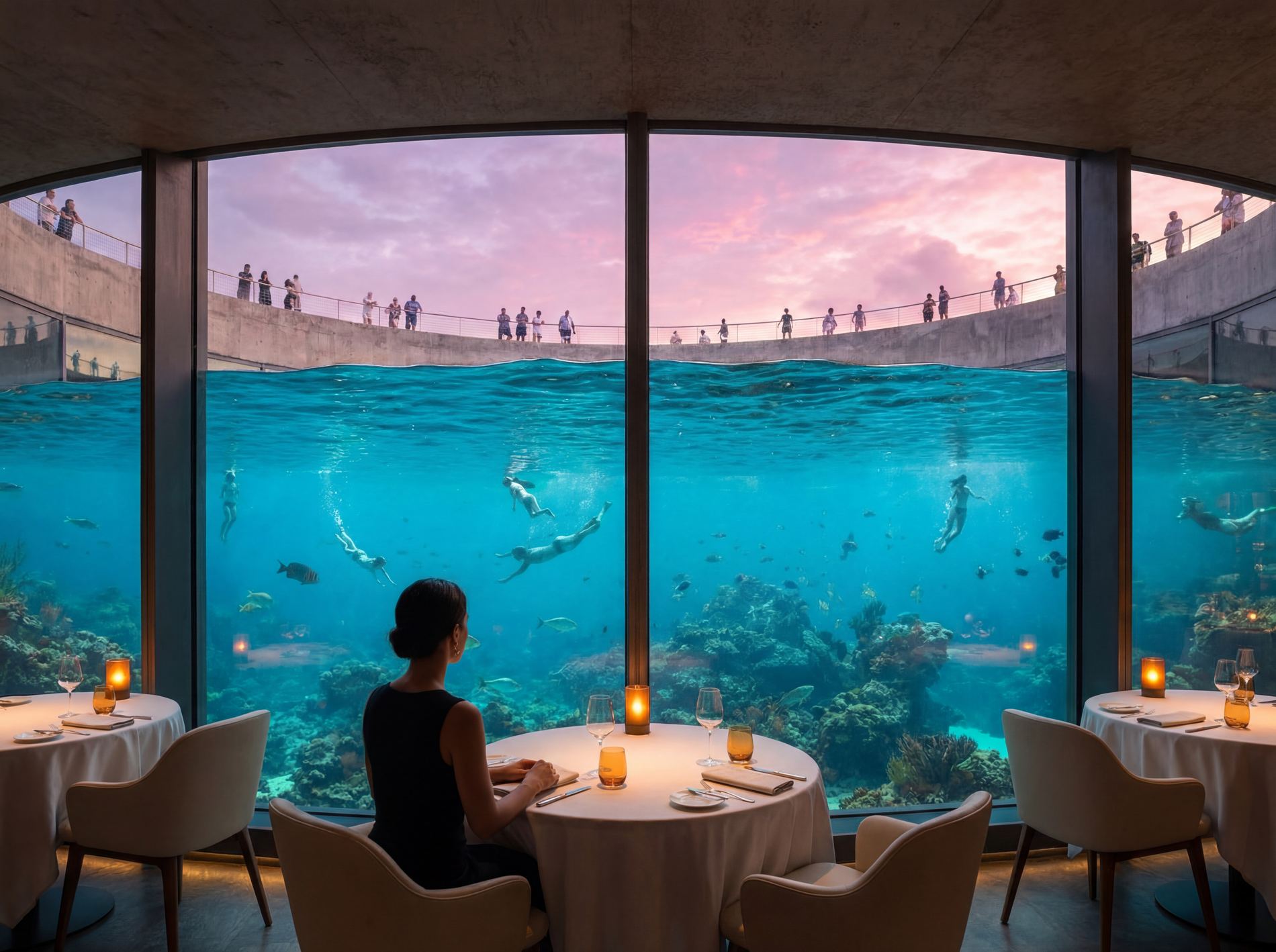
A circular dining hall three and a half metres beneath the surface. Curved low-iron glass, three metres high. The room for which the section exists. Above, the open civic level. Below, the contained intimate one. The duality is the proposition.
not an object.
a loop.
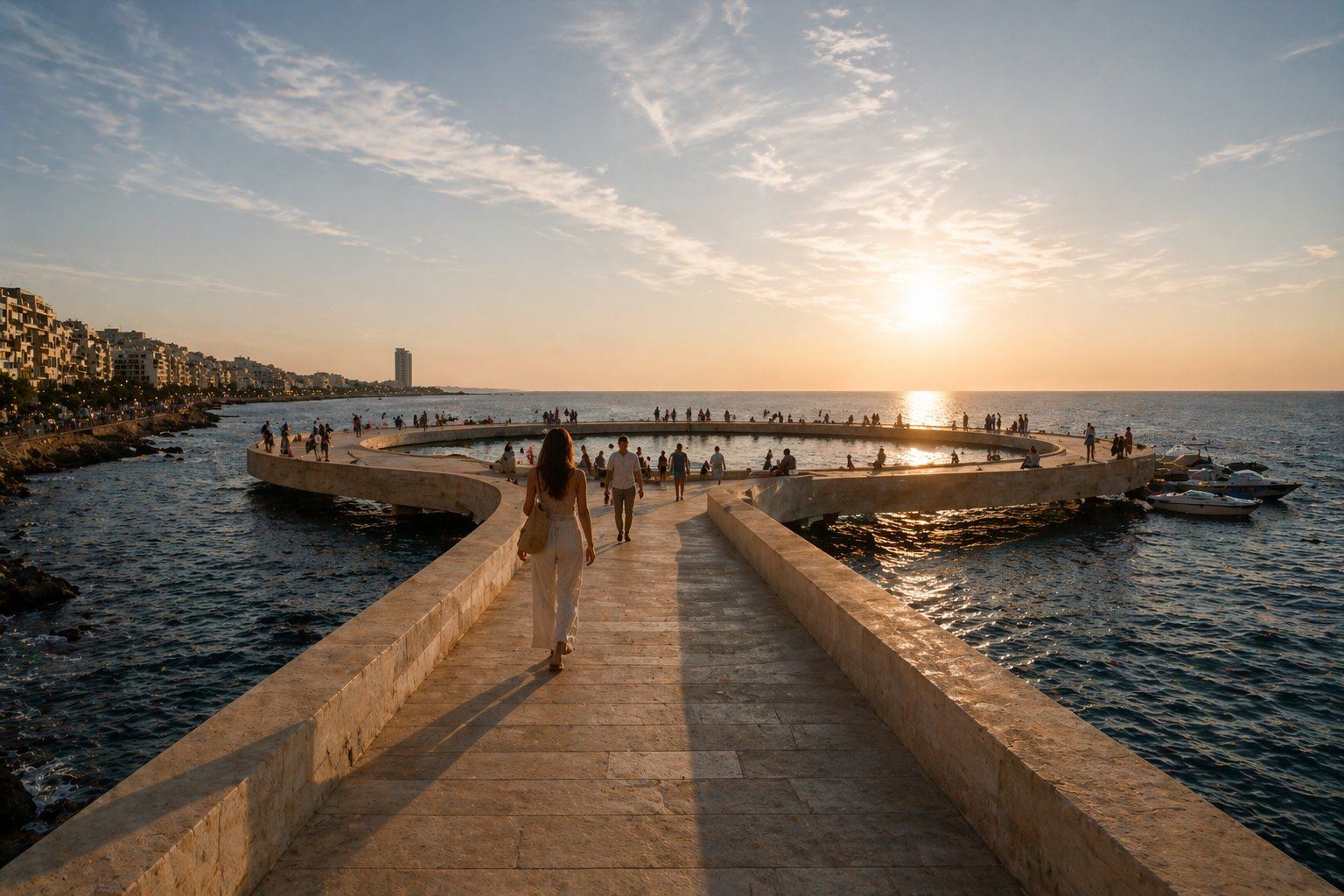
The promenade does not end. It extends. It leaves the certainty of land and enters the instability of water without breaking. A single continuous move, low, horizontal, sea-resilient. Built from maltese limestone, used as continuity rather than cladding, from promenade to structure to edge.
At the centre, the project does not build. It removes. A controlled void of mediterranean. The sea is no longer a backdrop. It is a room.
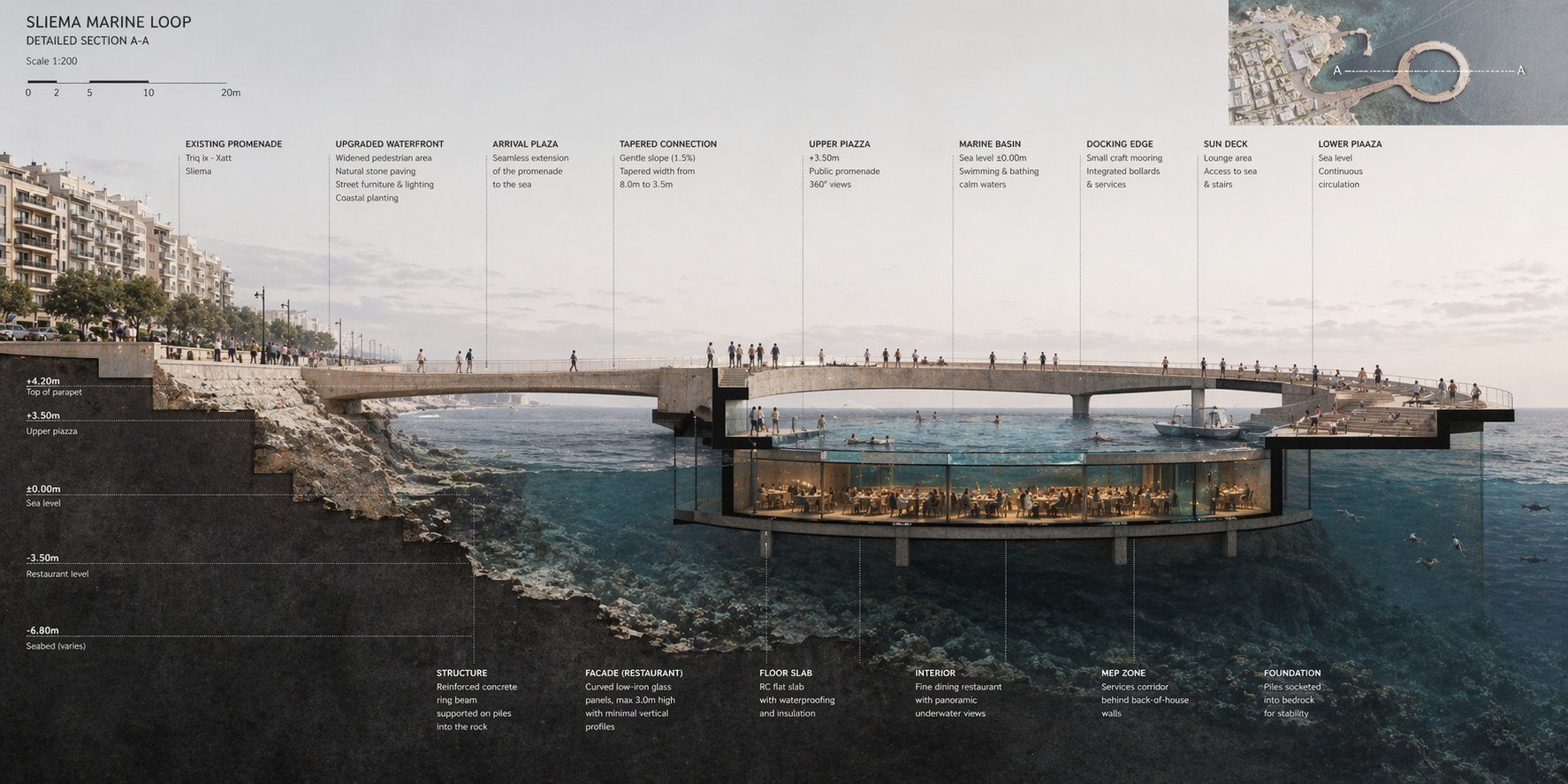
reinforced concrete ring beam supported on piles socketed into the bedrock. piles socketed for stability against easterly seas.
curved low-iron glass panels, three metres high, with minimal vertical profiles. the dining room is a glass-walled ring beneath the surface.
maltese limestone from promenade to upper piazza. the project is built from place. it weathers. it ages. it absorbs light.
the morning swimmer.
The first use of the day is the oldest. Sliema has bathed at this rock for a century. The lower piazza meets the sea at the level the rock already sits at. The loop holds the public bathing the city already does. It does not invent a use. It dignifies one.
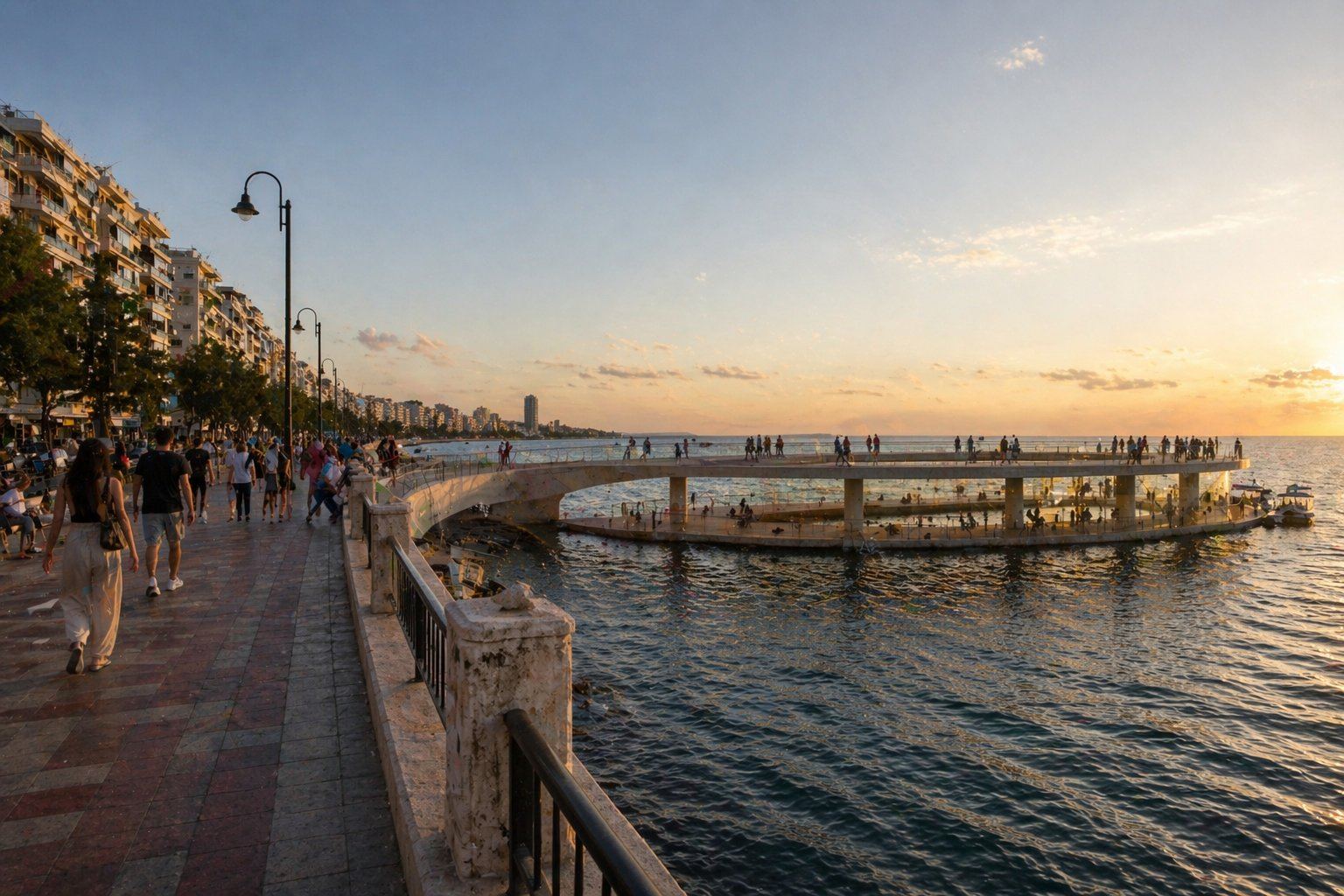
the afternoon walker.
The promenade is the most activated public edge in the mediterranean. The loop adds a destination at its centre, where the linear becomes situational. A pause inside a flow. A point at which the promenade stops being a corridor and becomes a room. The civic argument is contained in this small shift.
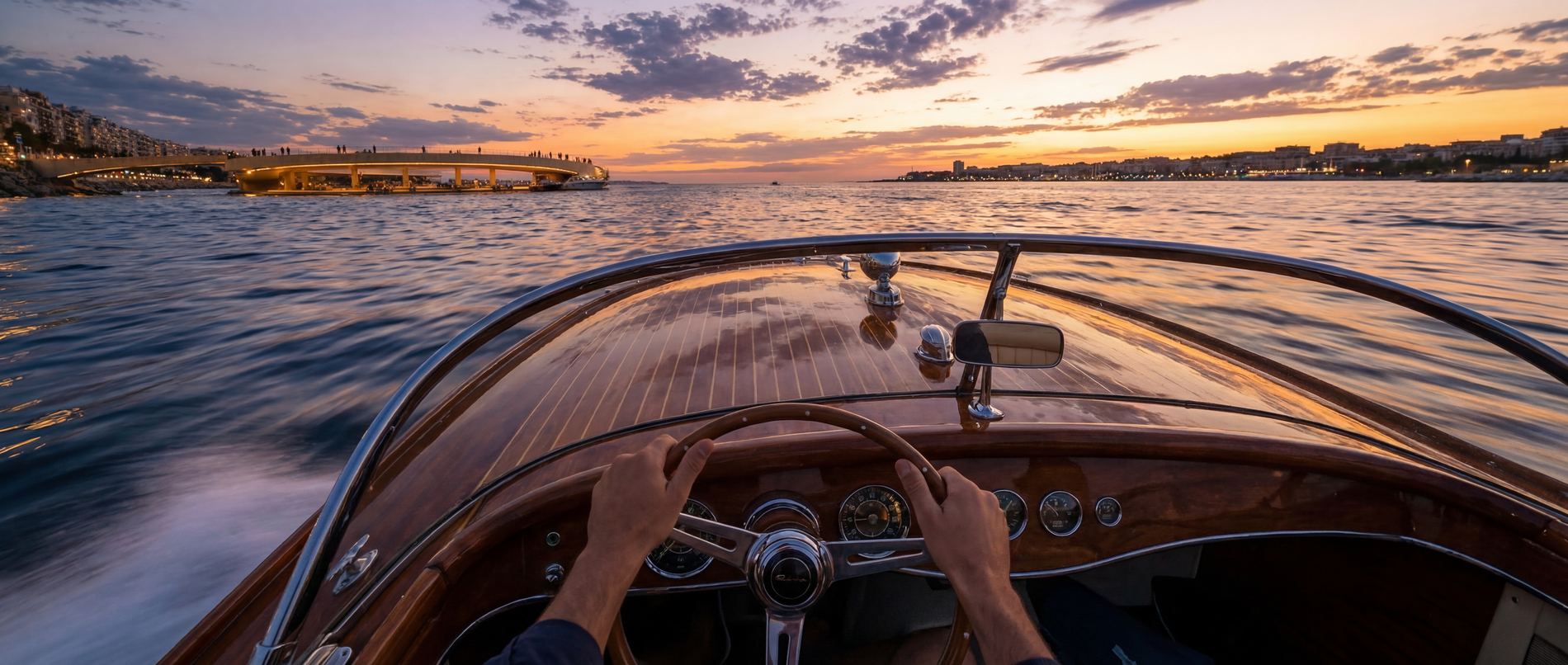
the arrival by sea.
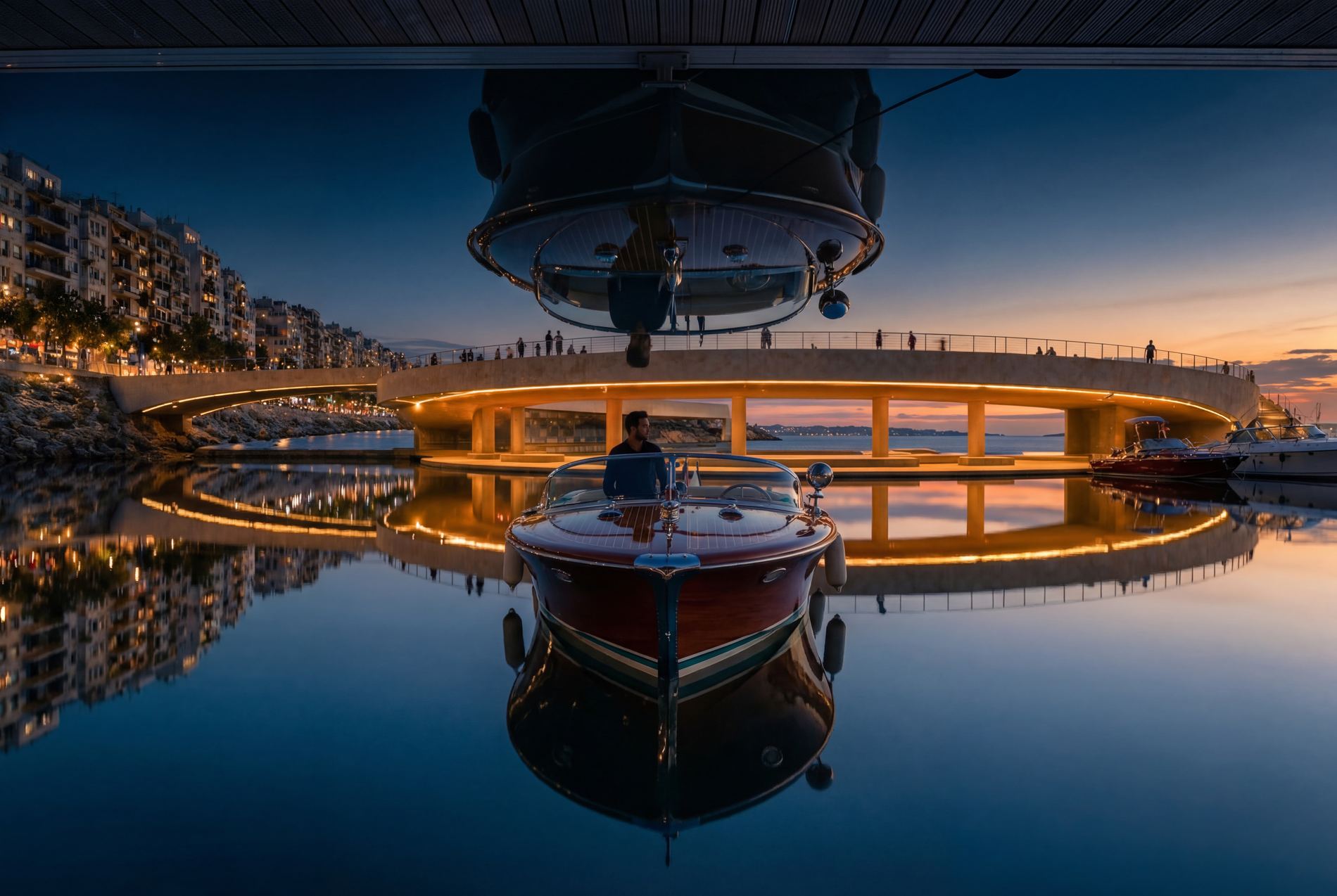
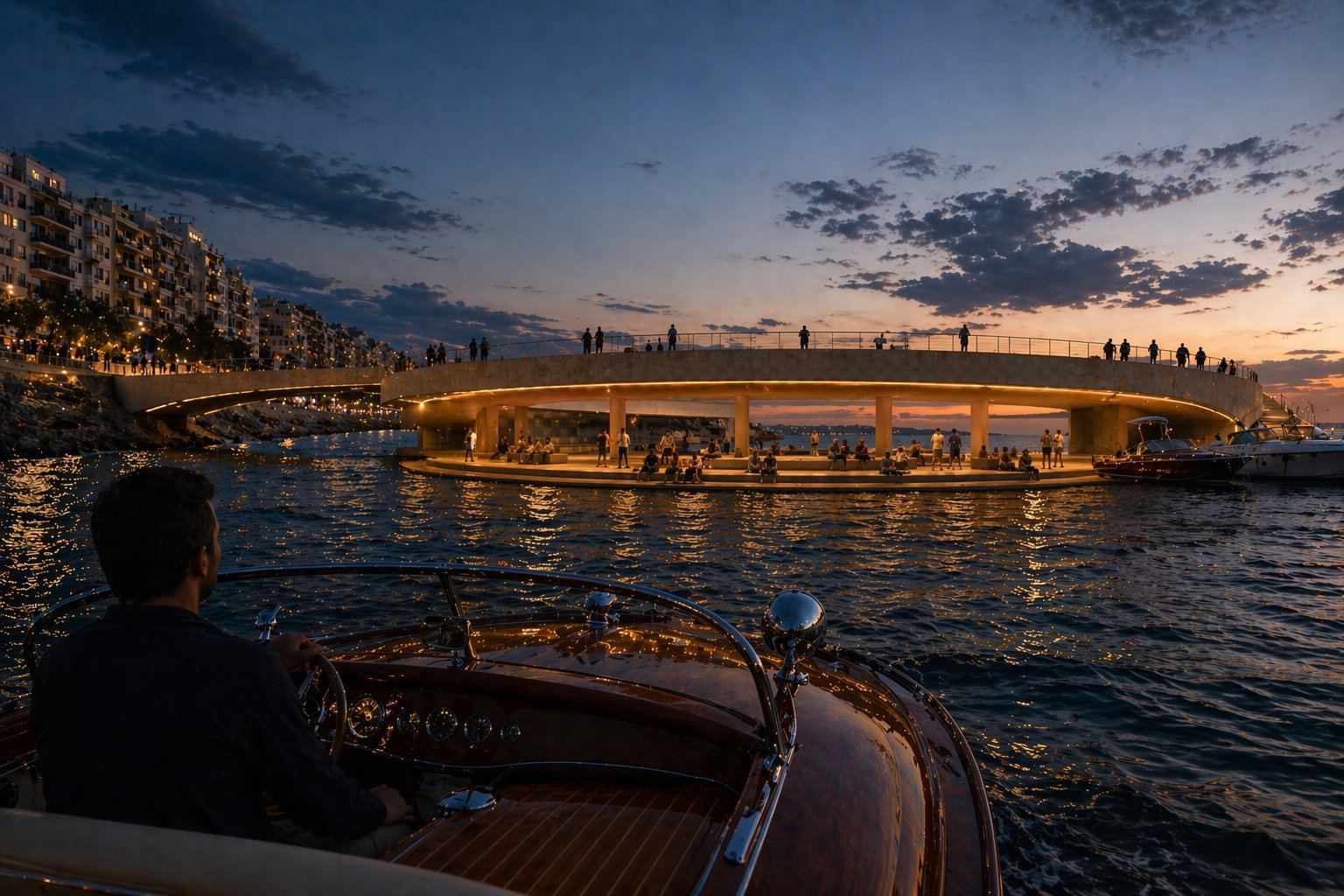
A small craft passes under the loop and docks at the ring's outer edge. The boat is part of the building's experience, not a service vehicle separate from it. The framework's evening pairing with valletta runs across this water. The chalet is the urban-coastal counterpart to the heritage anchor on the harbour's other side.
the descent.
From the public level, a short stair drops to the dining hall beneath the surface. The sky is gone. The water is the room's principal wall. Above, the public walks the upper piazza. Below, the diner sits with the sea three metres above the table. The two registers exist at the same address, on the same evening, without compromise.
the return.
The dinner ends. The diner climbs back to the upper piazza. The walk home is the same promenade, now at full evening. The framework's six-night score is closed: st john's, the harbour, and an urban-coastal evening at the chalet, as the public seafront is re-met. The day has been one continuous public room, with one private room briefly inside it.
the upper loop.
The public level. A circular promenade above the sea, three and a half metres above the existing waterfront, reached by a tapered connection that narrows from eight metres to three and a half as it leaves land. A piazza, in the mediterranean sense — open, unprogrammed, civic.
scroll through the day —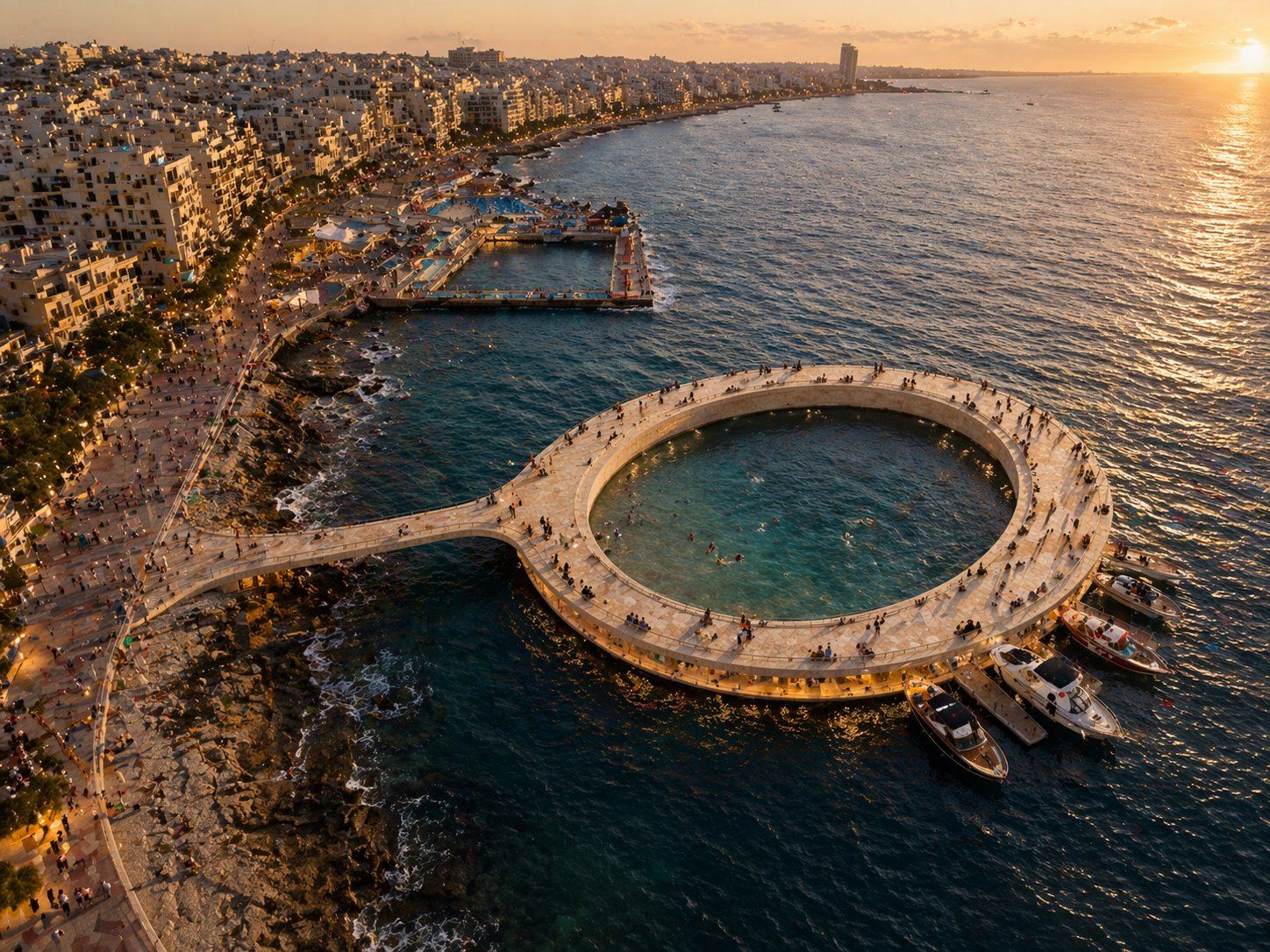
the marine basin.
A second loop at the level of the sea, holding a circular body of held water. Swimming and sunbathing on the inside edge, small-craft mooring on the outside. The geometry shelters the basin from the easterly seas that have ruined every previous proposal for the site. The brief's hardest constraint is the project's organising idea.
scroll through the day —the dining hall.
A circular dining room three and a half metres beneath the surface. Curved low-iron glass, three metres high, holding the sea on three sides. The framework's evening anchor for the heritage day, set inside the most architecturally specific room the proposition contains. The civic and the private occupy the same building, on the same evening, at the same address.
scroll through the day —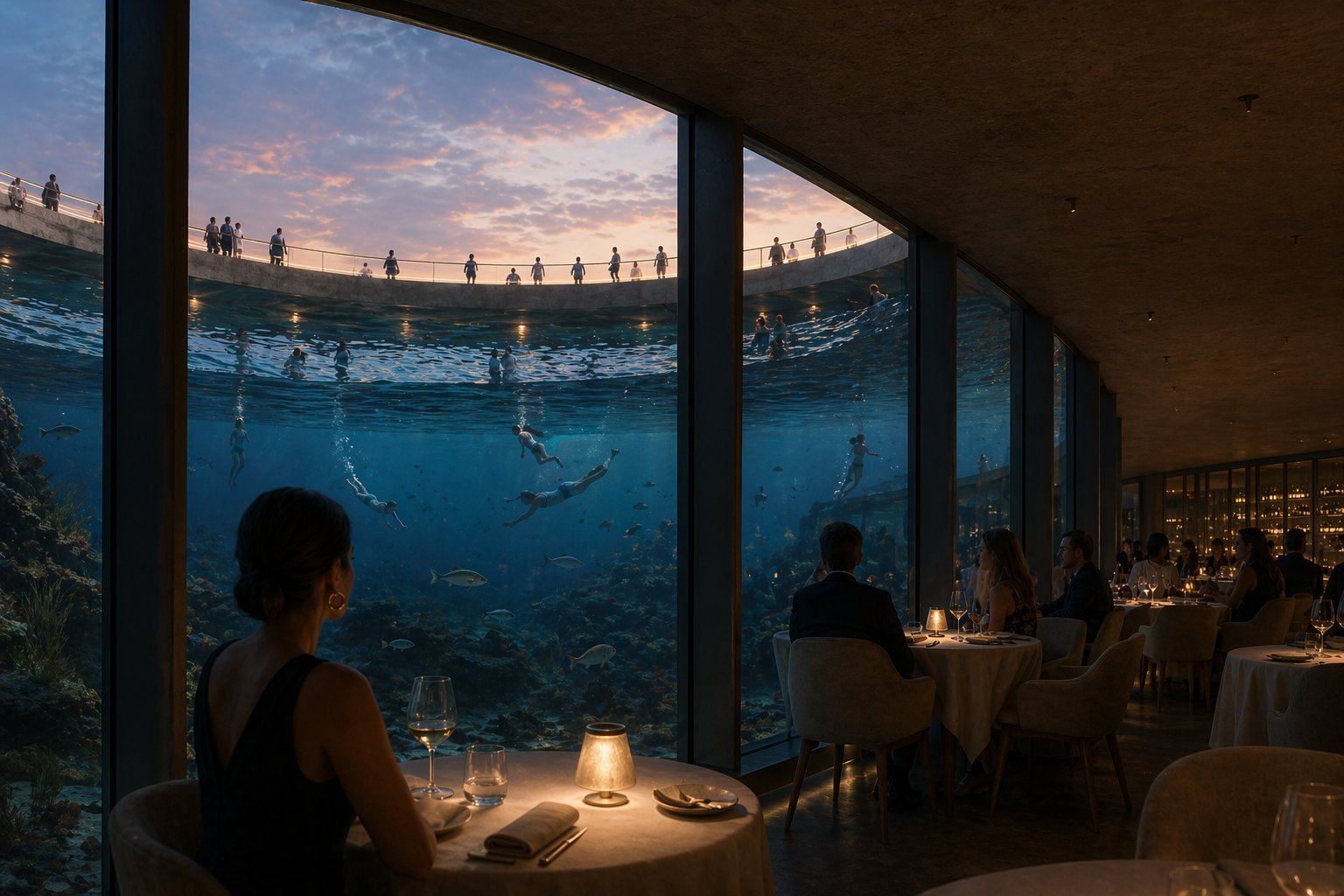
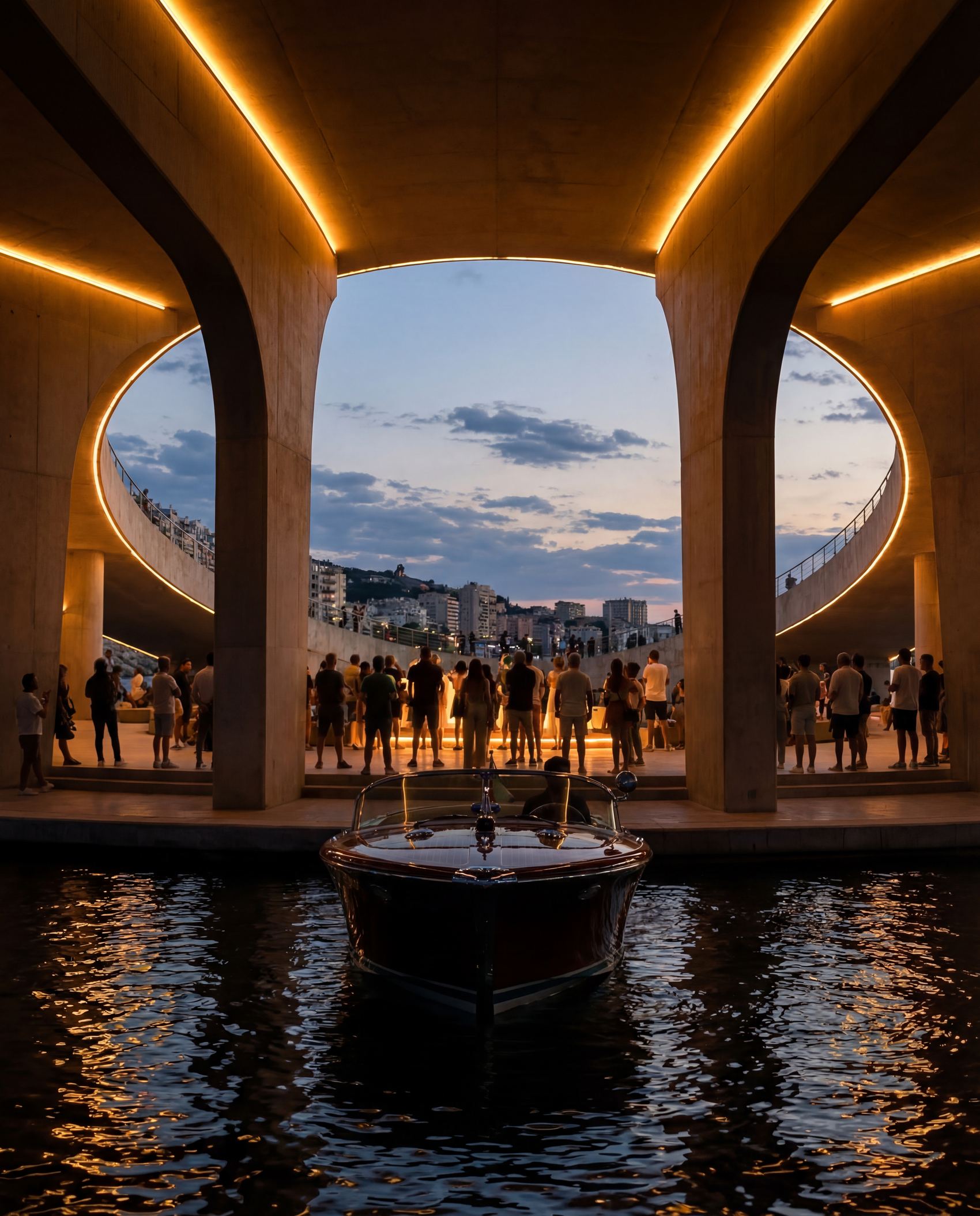
the docking edge.
Beneath the upper loop, where the structure's piles meet the sea, a vaulted public room receives small craft. Boats are part of the building's experience, not a service vehicle separate from it. The arrival is by water as readily as by foot. The promenade's continuity reaches under the sea as well as above it.
scroll through the day —the chalet works because the six work together.
The chalet is one of six catalyst projects in the parent framework. Each performs a different role in the six-night maltese stay. The chalet's role is the urban-coastal evening, on night two, paired with valletta and the harbour.
closing
now, for the first time, within it.